Walking a Small Dog After Dark: Winter Evenings in Sapporo
Contents
- Why dark winter evenings need extra care
- Be seen: reflective and light-up gear
- Choose bright, busy streets
- Watch your footing on icy sidewalks
- How drivers see you
- Shorter walks plus indoor play
- FAQ
- What can I do so drivers see my small dog at night?
- Is it okay to walk my small dog in the dark in winter?
- Should I make winter evening walks shorter?
In short: in winter the days are short, so an evening walk can easily happen in the dark. A small dog sits low to the ground and can be hard for drivers and cyclists to see. Reflective or light-up collars and leashes, a light for you, and bright clothing can help you both stand out. Choose well-lit streets where other people are around, slow down on icy sidewalks, and keep walks shorter on cold, dark evenings, adding some play indoors. If anything about your dog’s body worries you, please ask your vet.
In a Sapporo winter, the sun goes down much earlier than in summer. If you work during the day, that can mean the evening walk with the dog happens after dark. Add snow, ice, and cold air, and an ordinary walk needs a little more planning.
Please read this first: this post is a set of general ideas for walking a dog after dark in winter. It is not about my own dog, and it is not expert advice. I am not a veterinarian or a dog trainer, and I can’t judge your dog’s body or health. If you notice anything about your dog that worries you, please ask your vet.
Why dark winter evenings need extra care
A few things change when you walk after dark in winter:
- Visibility drops. Drivers, cyclists, and other walkers have less light to see you by.
- A small dog is low to the ground. It can be outside a driver’s view, especially near parked cars or snowbanks.
- Snowbanks narrow the sidewalks. You may end up walking closer to the road than usual.
- Ice is harder to spot. In the dark, a frozen patch can look the same as packed snow.
- It is colder. Evenings tend to feel colder than the middle of the day.
Be seen: reflective and light-up gear
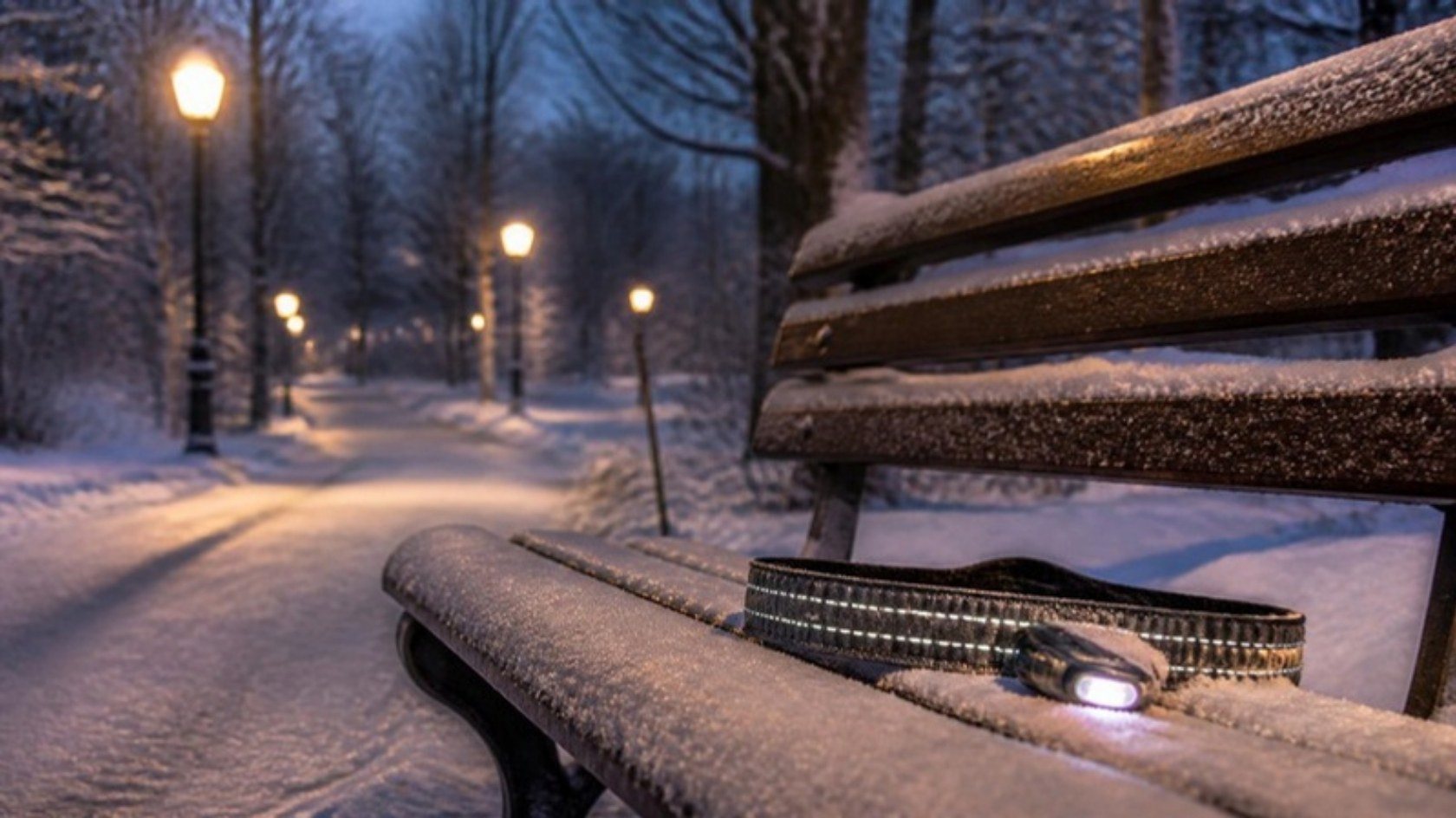
The simplest step is to make both of you easier to see. Reflective materials shine back when headlights hit them, and light-up items glow on their own.
| Item | What it does | Points to think about |
|---|---|---|
| Reflective collar or harness | Shines back when car lights hit it | Check that it fits well and your dog can’t slip out |
| Reflective or light-up leash | Shows the line between you and your dog | Helps others notice there is a dog on the end |
| Clip-on light for the collar | Glows on its own, even without car lights | Check the battery or charge before you leave |
| Flashlight or headlamp for you | Lets you see the ground and be seen | A headlamp keeps your hands free for the leash |
| Bright or reflective jacket for you | Makes the person easier to spot | A visible person makes it easier to notice the dog beside them |
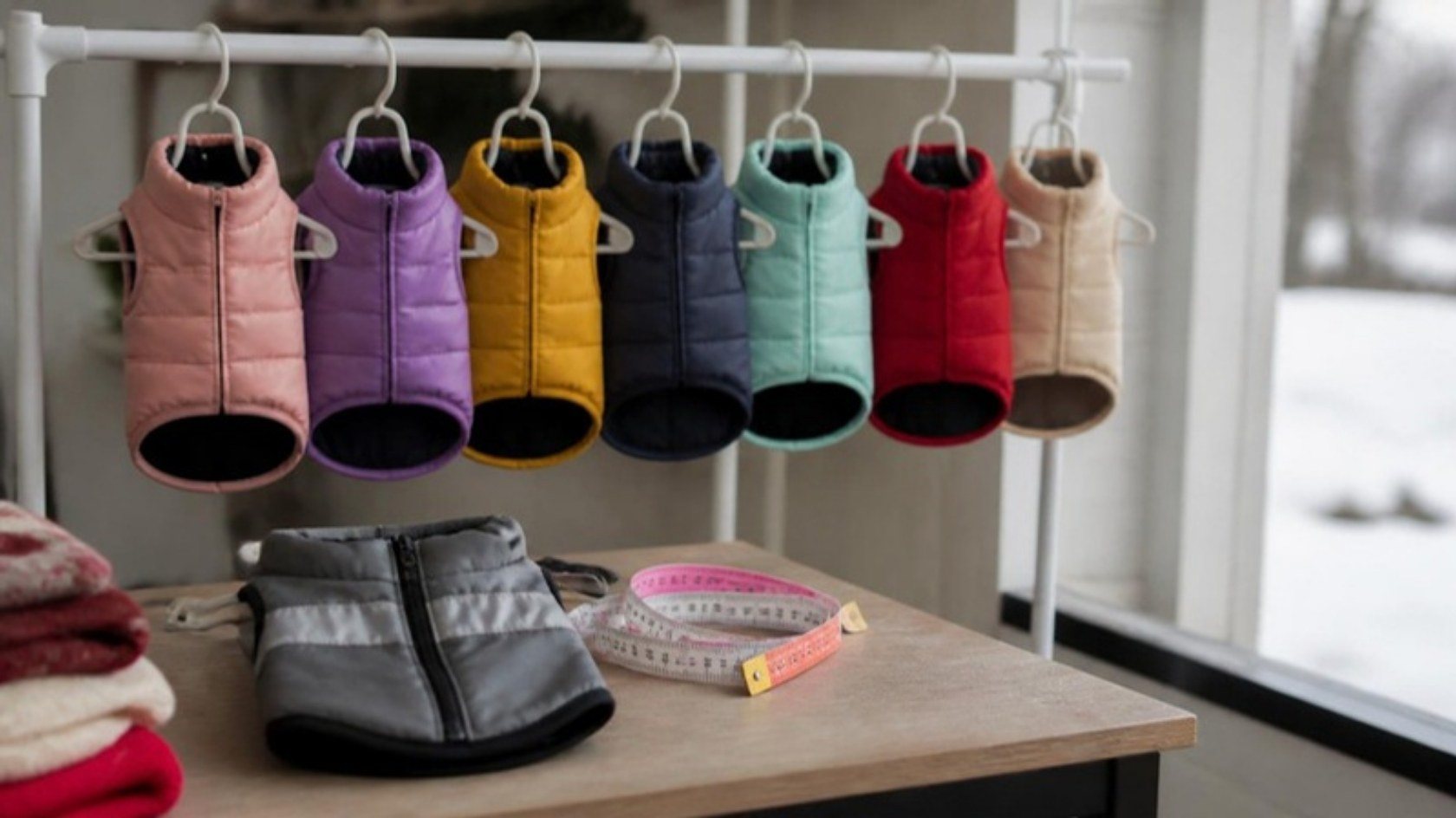
A dog coat with reflective trim can also help if your dog already wears one in winter. Whatever you choose, let your dog get used to new gear indoors first, a little at a time, so the first dark walk isn’t also the first time wearing it.
Choose bright, busy streets
On a dark evening, the route matters. A short walk on a well-lit street can feel calmer than a longer one down a quiet, unlit lane.
- Pick streets with streetlights and shops or homes with lights on.
- Choose places where other people are walking. If something goes wrong, there are people around to ask.
- Avoid paths you only know from daylight until you have walked them once in the dark.
- Watch for spots where snowbanks block the view, such as driveways and corners.
- Tell someone at home your usual route, or carry a phone with you.
In busy places, keep the leash short so your dog stays close and predictable. The City of Sapporo has rules about leashes in public places; my post Leash Walking Manners in a Busy City: Habits for Small Dogs explains what the city’s page says and links to it.
Watch your footing on icy sidewalks
Winter sidewalks in Sapporo can change from soft snow to hard ice over a short distance. In the dark, that change is harder to see.
| Situation | One way to handle it |
|---|---|
| Shiny or smooth-looking patches | Treat them as ice and walk around them if you can |
| Crossings and corners | Slow down; feet and tires can pack these spots hard |
| Slopes and steps | Take small steps and keep the leash short |
| Your dog pulls toward a smell | Stop first, then let your dog sniff, so you aren’t pulled on ice |
| Your shoes | Winter boots with good grip, or slip-on ice cleats, can help |
Your own balance matters too. If you slip while holding the leash, your dog may be pulled or startled. A headlamp or flashlight pointed at the ground a few steps ahead can help you see what’s coming.
Sidewalks may also have de-icing materials on them. My post Your First Sapporo Winter with a Small Dog: A Simple Checklist covers snow, ice, and de-icing materials, and what to check after the walk.
How drivers see you
It can help to think about the walk from a driver’s seat. A driver turning a corner at night sees headlights, streetlights, and glare from the snow. A small dog at knee height in dark fur can disappear into that picture.
- Cross at crossings and wait for the signal, even if the street looks empty.
- Make eye contact with drivers before stepping out, when you can.
- Keep your dog on the side away from the road on narrow sidewalks.
- Be careful near parking lots and driveways, where cars may be backing out.
- Avoid wearing headphones so you can hear cars coming.
Your lights and reflective gear work better when you also walk in a way that is easy to predict.
Shorter walks plus indoor play
On cold, dark evenings, you don’t have to fit all of your dog’s activity into one long walk. One option is a shorter evening walk plus some play or sniffing games at home.
| Part of the evening | Idea |
|---|---|
| Before the walk | Put on gear indoors and check lights |
| The walk | A shorter loop on a bright, familiar route |
| After the walk | Wipe paws, remove snowballs, and dry your dog |
| Later at home | A few minutes of a sniffing game or short training game |
For ideas, see Indoor Play Ideas for a Small Dog on Snowy Days, which has nose games, short training games, and tips for making your home safer for play.
How long a walk suits your dog depends on the dog, the weather, and the day. If you are unsure, or if your dog seems uncomfortable in the cold, please ask your vet.
Winter evenings in Sapporo are long, but a little light and a well-chosen route can make the walk feel calmer. Be seen, take it slowly on the ice, and let the indoor games carry some of the load on the coldest nights.
FAQ
What can I do so drivers see my small dog at night?
One approach is a reflective or light-up collar, harness, or leash, plus a clip-on light. Wearing a bright or reflective layer yourself and carrying a flashlight can also help, so the person holding the leash is easier to spot. Walk on well-lit streets and cross at crossings.
Is it okay to walk my small dog in the dark in winter?
Walking after dark is part of winter for owners who work during the day. Choosing bright, busy routes, using lights and reflective gear, and slowing down on ice can make it calmer. If you have questions about your dog’s body or the cold, ask your vet.
Should I make winter evening walks shorter?
That depends on your dog and the weather. You might keep cold, dark evening walks shorter and add sniffing or training games indoors. If you are not sure what suits your dog, please ask your vet.