Your First Sapporo Winter with a Small Dog: A Simple Checklist
Contents
- What winter in Sapporo is like
- Before the walk: timing, coat, and paws
- Snow, ice, and de-icing materials on sidewalks
- Indoors: heating and dry air
- The checklist, and when to ask your vet
- When in doubt, ask your vet
- FAQ
- When does snow usually start in Sapporo?
- Does my small dog need boots and a coat?
- Why should I wipe my dog’s paws after a winter walk?
Winter in Sapporo is long, cold, and snowy. For many people it is beautiful. But if it is your first winter here with a small dog, it can also feel like a lot to prepare for.
This post is a simple checklist. It is general information from someone who lives in Sapporo, not expert advice. I am not a veterinarian. Every dog is different, so whenever you have a question about your dog’s health, paws, skin, or how much cold is okay, please ask your vet.
What winter in Sapporo is like
Sapporo is a big city with a lot of snow. Snow usually starts in late autumn and stays on the ground for months.
Here are the official climate normals for Sapporo from the Japan Meteorological Agency (JMA). These are 30-year averages (1991–2020), not a forecast for this year.
| Month | Average temp (°C) | Average daily low (°C) | Total snowfall (cm) | Max snow depth (cm) |
|---|---|---|---|---|
| November | 5.2 | 1.6 | 30 | 15 |
| December | -0.9 | -4.0 | 113 | 47 |
| January | -3.2 | -6.4 | 137 | 76 |
| February | -2.7 | -6.2 | 116 | 95 |
| March | 1.1 | -2.4 | 74 | 82 |
Source: JMA climate normals for Sapporo (Japanese page). The yearly normal for total snowfall is 479 cm.
What does this mean in daily life? A few simple points:
- December to February are below freezing on average. Daily lows are often well under 0°C.
- Snow piles up. By February, the snow on the ground can be deep, and snowbanks along roads get high.
- Sidewalks change every day. Fresh snow, packed snow, slush, and ice can all appear in the same week.
- Days are short. In midwinter, it gets dark early, in the late afternoon.
A small dog is close to the ground, so all of this feels much bigger from a dog’s point of view.
Before the walk: timing, coat, and paws
You don’t need special skills for winter walks. But a little planning helps.
Check the weather and the sidewalk. Before you go out, look at the temperature, the wind, and whether it is snowing hard. After a snowy night, sidewalks may not be cleared yet. On very cold or stormy days, many owners choose a shorter walk.
Think about timing. Some owners like to walk when it is a little warmer, around midday. Others walk early or late because the sidewalks are quieter. Either way, if you walk after dark, be visible. A reflective vest or a small light on the leash or collar helps drivers see you and your dog.
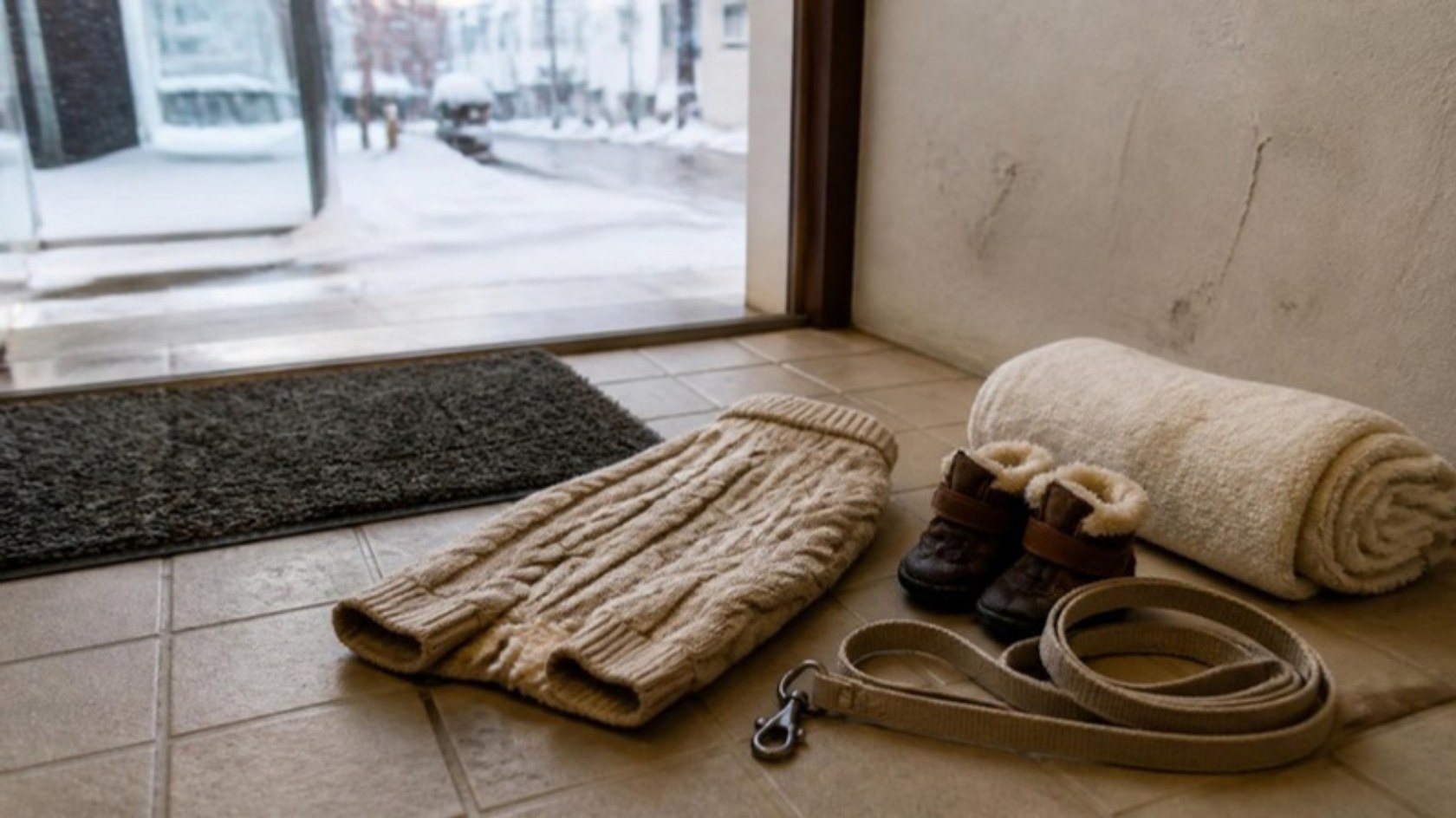
Consider a coat. Many small-dog owners in snowy cities use a dog coat or sweater in winter. Whether your dog needs one depends on the dog’s size, coat, age, and health. If you are not sure, ask your vet.
Think about paws. Snow can stick to the fur between the toes and form little balls of ice. Some owners use dog boots or paw wax. Some dogs accept boots easily, and others don’t like them at all. If you want to try boots, practice at home first, for short times. If you have any concerns about your dog’s paw pads, please ask your vet.
Keep the leash short and secure. Snowbanks can block your view at corners and hide cars and bicycles. A short leash keeps your dog close to you and away from the road.
Snow, ice, and de-icing materials on sidewalks
Winter sidewalks in a snowy city are not like summer sidewalks.
Ice. Packed snow can turn into smooth ice, especially at crossings and in shady spots. This is a slipping risk for you as much as for your dog. Good winter shoes with grip help a lot. Walk slowly, and don’t let your dog pull you off balance.
Sand, gravel, and de-icing materials. In snowy places, you may see sand or small gravel spread on sidewalks to stop people from slipping. Some roads and paths may also be treated with de-icing agents (chemicals that melt ice). These can stick to your dog’s paws and fur.
A common habit among owners is simple: after the walk, wipe your dog’s paws and belly with a towel or a damp cloth, and dry them well. This also removes snowballs from the fur. Try not to let your dog lick or eat snow from the roadside, because you don’t know what is in it.
Snowbanks and piles. Small dogs love to explore snowbanks. But piles of snow can hide holes, sharp objects, or ice. Let your dog explore in safe, open places, and keep an eye on them.
If you notice anything unusual about your dog’s paws or skin after walks, such as redness, cracks, limping, or a lot of licking, please ask your vet. Don’t try to guess the cause yourself.
Indoors: heating and dry air
In a Sapporo winter, the heating at home often runs for many hours a day. Inside it is warm, but the air can become very dry.
Here are a few simple points for indoor life:
- Water. Make sure fresh water is always available.
- Heater safety. Keep your dog away from kerosene stoves and space heaters, and keep cords out of reach. Don’t leave your dog alone near an unguarded heater.
- A comfortable spot. Give your dog a bed away from direct heat and away from cold drafts by doors or windows, so the dog can move to a spot that feels right.
- Dry air. Some people use a humidifier in winter. If you use one, keep it where your dog can’t knock it over.
- Indoor play. On days when the weather is too rough for a long walk, short games at home can help your dog stay active.
If you think the dry air is affecting your dog’s skin or coat, ask your vet before trying any product.
The checklist, and when to ask your vet
Here is everything in one table. Use it as a starting point, not as a rulebook.
| When | Item | Why | Ask your vet? |
|---|---|---|---|
| Before winter | Talk to your vet about winter | Every dog is different | Yes |
| Before winter | Dog coat or sweater (if needed) | Small dogs are close to the cold ground | If unsure |
| Before winter | Boots or paw wax (optional) | Snow and ice on paws | If unsure |
| Before winter | Reflective vest or leash light | It gets dark early | No |
| Before winter | Winter shoes with grip (for you) | Icy sidewalks | No |
| Every walk | Check weather and sidewalks | Conditions change daily | No |
| Every walk | Short, secure leash | Snowbanks block your view at corners and hide cars and bicycles | No |
| After every walk | Wipe and dry paws and belly | Remove snow, sand, and de-icing materials | If you see a problem |
| At home | Fresh water, safe heater area | Warm, dry rooms | If you see a problem |
When in doubt, ask your vet
I want to say this clearly: this post is not medical advice. Cold, paws, skin, and how long a walk should be are all questions where your dog’s age, size, coat, and health matter. Your veterinarian knows your dog. Please ask them.
If you are new to Japan and need help finding information in English, the City of Sapporo has a page for foreign residents. For the basic rules for dog owners in Japan, see my post Living with a Dog in Japan: Basic Rules and Manners.
Stay warm, walk safely, and enjoy the snow together.
FAQ
When does snow usually start in Sapporo?
Snow usually starts in late autumn. According to JMA climate normals, November already has some snowfall, and December to March are the main snow months. Check the JMA page for the numbers, and check the weather forecast for each day.
Does my small dog need boots and a coat?
It depends on the dog. Some owners use them, and some don’t. Size, coat, age, and health all matter. Please ask your vet what is right for your dog.
Why should I wipe my dog’s paws after a winter walk?
Snow can form ice balls in the fur, and sidewalks may have sand, gravel, or de-icing materials on them. Wiping and drying the paws and belly after a walk is a common, simple habit among owners. If you notice redness, cracks, or limping, ask your vet.