Choosing a Winter Coat for a Small Dog in Sapporo: What to Check
Contents
- Does your small dog need a winter coat?
- How to measure your dog for a coat
- What to look for in a winter coat
- Freedom to move
- Easy on, easy off
- Reflective trim for dark evenings
- Fabric that sheds snow
- Easy to wash
- Trying it on and getting used to it
- Adjusting through the day: indoors and outdoors
- FAQ
- How do I find the right coat size for my small dog?
- Should my dog wear its coat indoors?
- Does every small dog need a winter coat?
In short: a winter coat for a small dog is easier to choose if you measure first and then check a few practical points. Measure around the neck, around the chest, and along the back, and compare those numbers with each brand’s own size chart. Look for a coat that lets your dog walk and sit freely, goes on and off without a struggle, has reflective trim for dark evenings, sheds snow easily, and can be washed at home. Let your dog get used to it slowly, and take it off indoors. Whether your dog needs a coat at all depends on the breed and the body, so if you are unsure, ask your vet or groomer.
In a Sapporo winter, pet shops and online stores fill up with dog coats and snowsuits, and a coat that looks warm on the hanger may not suit your dog once it is on. This post walks through the points to check before you buy, and how to help your dog get used to wearing one.
Please read this first: this post is a set of general ideas for choosing a winter coat for a small dog. It is not about my own dog, and it is not expert advice. I am not a veterinarian or a groomer, and I can’t judge your dog’s body or coat. If you are unsure whether your dog needs clothes, or what kind, please ask your vet or your groomer.
Does your small dog need a winter coat?
There is no single answer for every dog. Fur, body size, age, and how a dog handles the cold differ from dog to dog.
- Your dog’s fur: a thin or short coat of fur gives less cover than a thick one.
- Your dog’s size: a small dog sits close to the snow on the ground.
- Age and general condition: puppies and older dogs may need different care.
- How your dog acts outdoors: shivering or wanting to turn back early are signs to pay attention to.
For questions about your dog and the cold, ask your vet; a groomer can also tell you about your dog’s fur. My post Your First Sapporo Winter with a Small Dog: A Simple Checklist covers snow, cold, and icy sidewalks more broadly, including whether a small dog needs boots and a coat.
How to measure your dog for a coat
Sizes such as “S” or “M” differ from one brand to the next, so measure first and check each brand’s own size chart.
Here are three measurements to take:
| Measurement | Where to measure | Tips |
|---|---|---|
| Neck | Around the neck, where a collar would sit | Leave room to slide a finger or two underneath |
| Chest | Around the widest part of the chest, just behind the front legs | Measure at the widest point |
| Back length | From the base of the neck to the base of the tail | Some brands measure a little differently, so read the chart |
A few tips for measuring:
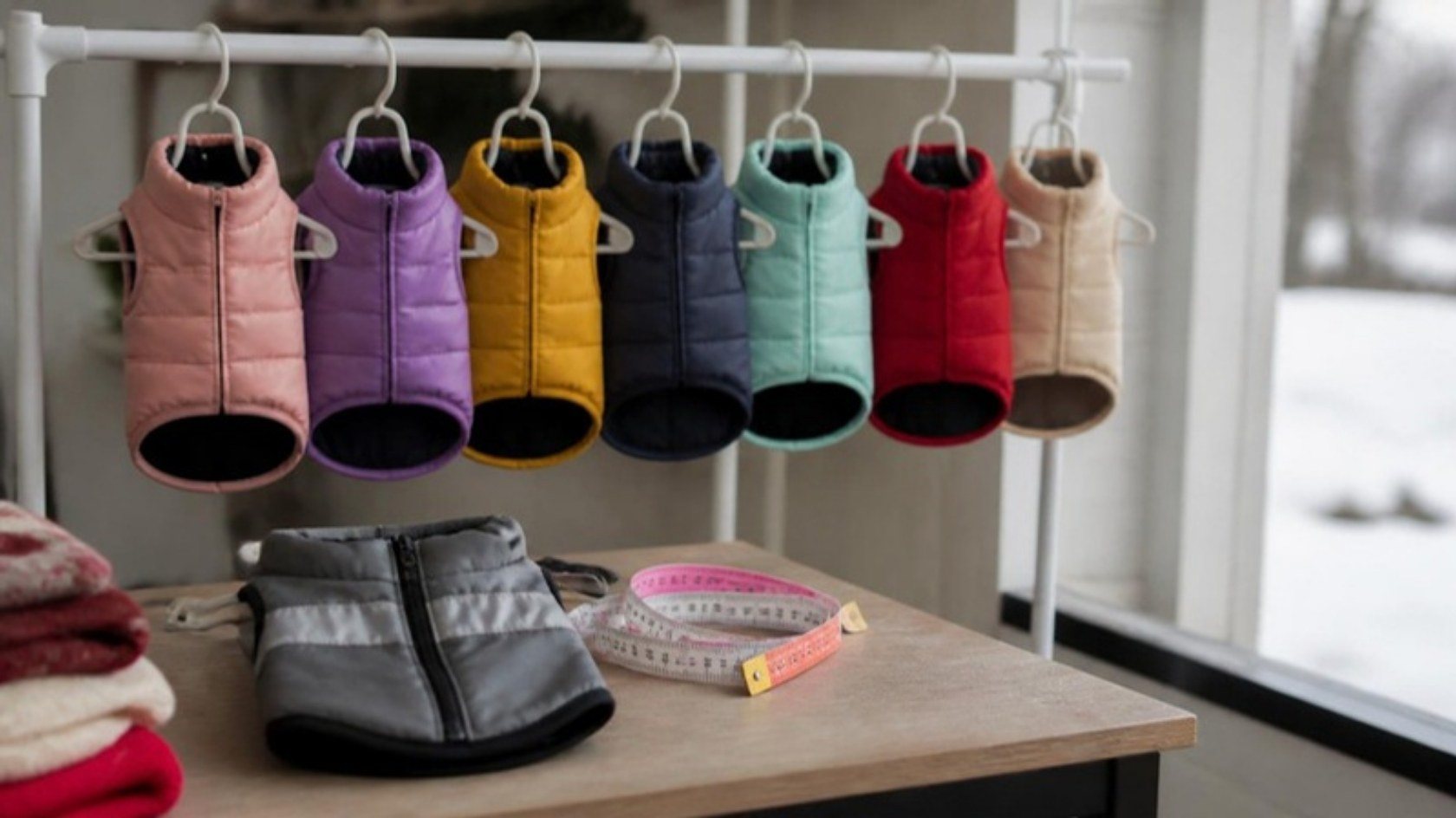
- Use a soft tape measure, the kind used for sewing.
- Measure with your dog standing, keeping the tape snug but not tight.
- Ask someone to help, with one person holding treats and the other measuring.
If your dog falls between two sizes, check the brand’s own advice.
What to look for in a winter coat
With the measurements in hand, these points can help you narrow down the choice.
| Point | What to check |
|---|---|
| Freedom to move | Your dog can walk, run, sit, and lie down without the coat pulling |
| Legs and underside | Nothing rubs under the front legs; the belly area allows your dog to relieve itself |
| Putting it on and taking it off | Simple fasteners, and no need to force legs or head through tight openings |
| Reflective trim | Strips or patches that shine back in car headlights |
| Outer fabric | A smooth surface that snow slides off, rather than one snow clings to |
| Washing | Can be washed at home, and dries in a reasonable time |
Freedom to move
Watch how your dog walks in the coat at home. If it steps stiffly, scratches at the coat, or won’t sit down, the fit or shape may not be right.
Easy on, easy off
Some coats slip over the head, and others wrap around the body and close with hook-and-loop strips, snaps, or buckles. A wrap-around style can be easier for a dog that doesn’t like having its head pushed through an opening.
Reflective trim for dark evenings
Reflective trim can help drivers and cyclists notice a small dog close to the ground on a dark evening. For more on lights, routes, and icy sidewalks after dark, see Walking a Small Dog After Dark: Winter Evenings in Sapporo.
Fabric that sheds snow
Wet, sticky snow can cling to fluffy or knitted fabric and form clumps. A smooth outer layer may let snow slide off more easily. Fur on the legs and belly can still collect snowballs, so a coat doesn’t replace checking and drying your dog after the walk.
Easy to wash
Winter walks bring slush and grit from the sidewalks. Check the care label before you buy, and consider a second coat so one can dry while the other is in use.
Trying it on and getting used to it
A new coat can feel strange at first, so you can introduce it step by step indoors.
- Let your dog sniff the coat before you put it on.
- Put it on for a short time, with treats and calm praise.
- Take it off before your dog gets upset, and try again later.
- Try a short walk once your dog moves comfortably in it at home.
Check for rubbing under the legs, around the neck, and where fasteners sit. If you notice redness or anything else on the skin that worries you, take the coat off and ask your vet. If your dog chews at the coat, its fasteners, or other small parts, take it off so that no pieces get swallowed.
Adjusting through the day: indoors and outdoors
A winter coat is for the walk, not for the whole day. In a heated home, a dog wearing a coat indoors can get too warm.
- Just home from a walk: take the coat off, brush off snow, and dry your dog.
- Indoors at home: let your dog go without the coat, and don’t leave your dog alone while it is wearing one.
- A wet coat: hang it to dry before the next walk.
A haircut can change how a coat fits. My post Questions to Ask a Dog Groomer: A Beginner’s Checklist has ideas for talking with a groomer, and a grooming visit can be a good moment to ask about winter fur and clothes.
Measure carefully, choose a coat that is easy to move in and easy to care for, and let your dog get used to it at its own pace. If you are not sure your dog needs one, start by asking your vet or groomer.
FAQ
How do I find the right coat size for my small dog?
Measure around the neck, around the widest part of the chest just behind the front legs, and along the back from the base of the neck to the base of the tail. Then compare those numbers with each brand’s own size chart, because sizes like “S” or “M” differ between brands.
Should my dog wear its coat indoors?
A winter coat is mainly for walks. In a heated home, taking the coat off indoors can keep your dog from getting too warm. Dry your dog and the coat after the walk.
Does every small dog need a winter coat?
Not necessarily. It depends on the breed, the type of fur, the dog’s size and age, and how long you are outside. If you are unsure whether your dog needs a coat, ask your vet or groomer.