Teaching a Small Dog to Wait at the Door: A Step-by-Step Plan
Contents
- Why practice waiting at the door?
- Before you start: a few ground rules
- Step by step: practicing “wait” at the door
- Using treats
- The release word
- If your dog moves too soon
- Getting the whole family on the same page
- Winter in Sapporo: the door and the ice
- Guests and deliveries: gates and carriers
- When progress stalls
- FAQ
- How long should each door practice session be?
- What is a release word, and why use one?
- What if my dog still runs to the door when guests arrive?
In short: teaching a small dog to wait at the front door goes more smoothly as a slow, friendly routine. Start with very short waits, reward calm moments with treats, and open the door only a little at a time. Use one release word to tell your dog the wait is over, and make sure everyone at home uses the same words. In a Sapporo winter, the step outside can be icy, so a dog that slips out can end up somewhere slippery and cold. For guests and deliveries, a gate or a carrier can keep your dog safe while you practice. Keep training free of punishment, and if progress stalls, ask a dog trainer for help.
The front door is one of the busiest spots in a home. Someone comes home, a parcel arrives, a guest rings the bell. A small dog can slip past your feet very quickly. This post walks through a simple plan for practicing a calm “wait” at the door, step by step.
Please read this first: this post is a set of general ideas for door training. It is not about my own dog, and it is not expert advice. I am not a veterinarian or a dog trainer, and I can’t judge your dog’s body or behavior. If your dog seems very worried, stressed, or hard to settle at the door, please talk with a dog trainer or your vet.
Why practice waiting at the door?
A calm wait at the door can make daily life safer and simpler:
- A small dog moves fast. It can get past legs before you notice the door is open.
- Outside the door may be a street. In a city, the sidewalk and the road can be just a few steps away.
- Winter adds ice. In Sapporo, the step outside the door and the path beyond it can be frozen.
- Visitors come and go. Guests, family, and delivery staff all open or stand at the door.
Practicing ahead of time means the door is less of a surprise for your dog, and less of a worry for you.
Before you start: a few ground rules
- Keep it kind. Use treats and calm praise. Don’t scold, push, or frighten your dog.
- Keep sessions short. A few minutes at a time is plenty.
- Choose a quiet moment. Practice when no one is arriving and your dog is not overexcited.
- Pick your words. Decide on one word for “wait” and one release word, such as “okay” or “free.”
A leash or a closed inner door can act as a safety net while you practice, so a mistake doesn’t end with your dog outside.
Step by step: practicing “wait” at the door
Move to the next step only when your dog is relaxed at the current one. If your dog gets up or rushes forward, go back to an easier step.
| Step | What you do | Move on when |
|---|---|---|
| 1. Wait near the door, door closed | Ask for “wait,” pause for a second or two, then reward | Your dog stays put for a short pause |
| 2. Add a little time | Make the pause slightly longer before the treat | Your dog stays calm for a few seconds |
| 3. Touch the handle | Reach for the handle without opening, then reward | Your dog stays when your hand moves |
| 4. Open the door a crack | Open just a little, close it again, then reward | Your dog stays while the door moves |
| 5. Open the door wider | Open a bit more each time, close, then reward | Your dog stays with the door partly open |
| 6. Step through yourself | Step out and back in, keeping your dog on leash | Your dog waits while you move |
Using treats
Small, soft treats your dog likes make practice easier. Give the treat while your dog is still waiting, so the reward goes with the calm behavior. If your dog has food limits, ask your vet which treats are suitable.
The release word
The release word tells your dog the wait is over. Say it clearly, then let your dog move. Use it every time, so your dog learns that the wait ends with the word, not with the door opening.
If your dog moves too soon
Calmly close the door, wait a moment, and try again from an easier step. There is no need for a harsh voice. Make the next try shorter, so your dog can get it right.
Getting the whole family on the same page
A dog can get confused if one person says “wait,” another says “stay,” and a third says nothing at all. A short family agreement can help.
| Topic | Agree on |
|---|---|
| The “wait” word | One word everyone uses |
| The release word | One word everyone uses, such as “okay” or “free” |
| Hand signal | Whether you add one, and which one |
| Who practices | Who runs short sessions, and when |
| Door rules | Who checks where the dog is before opening the door |
Children can join in with an adult nearby, starting with the easy steps.
Winter in Sapporo: the door and the ice
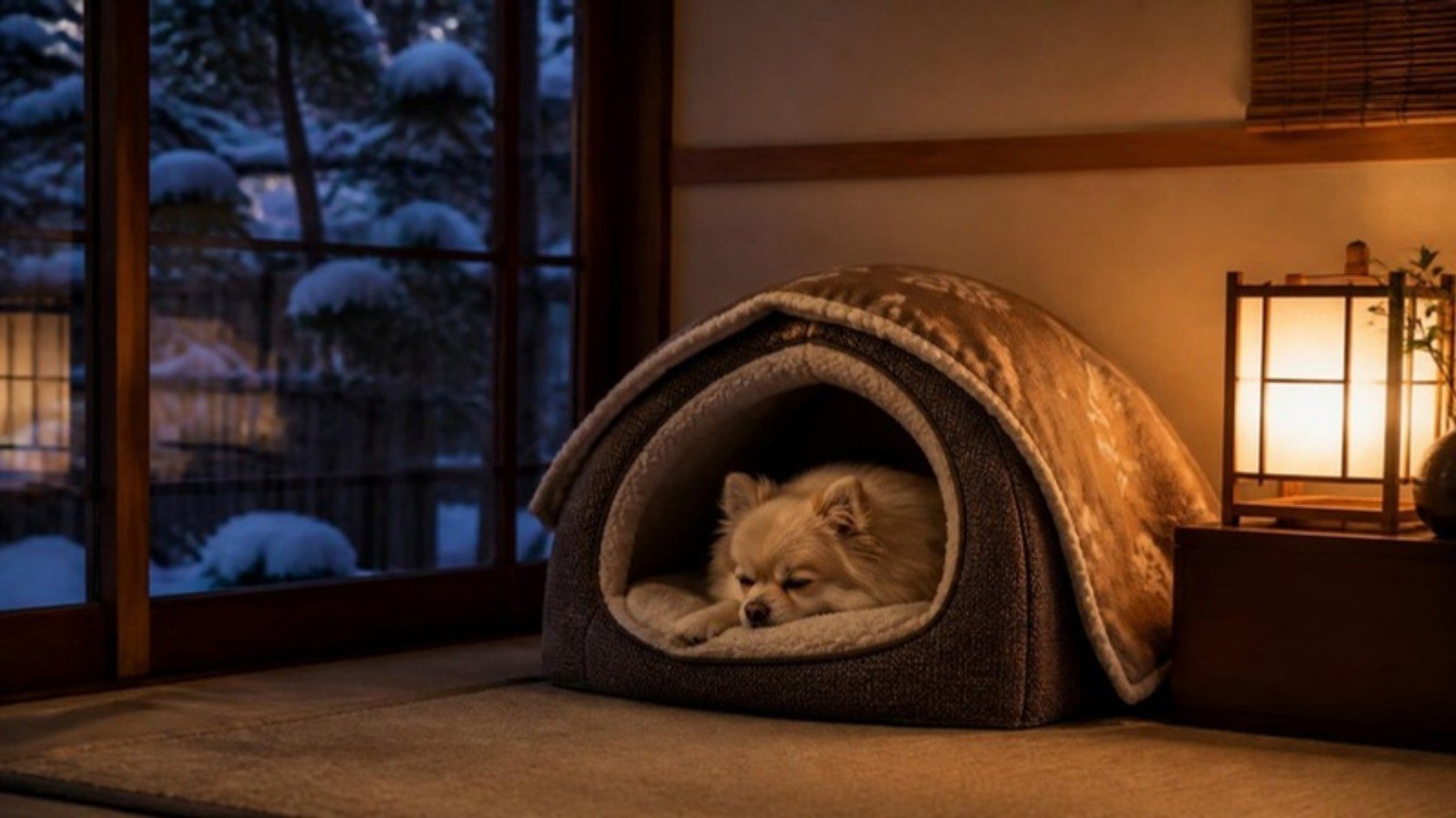
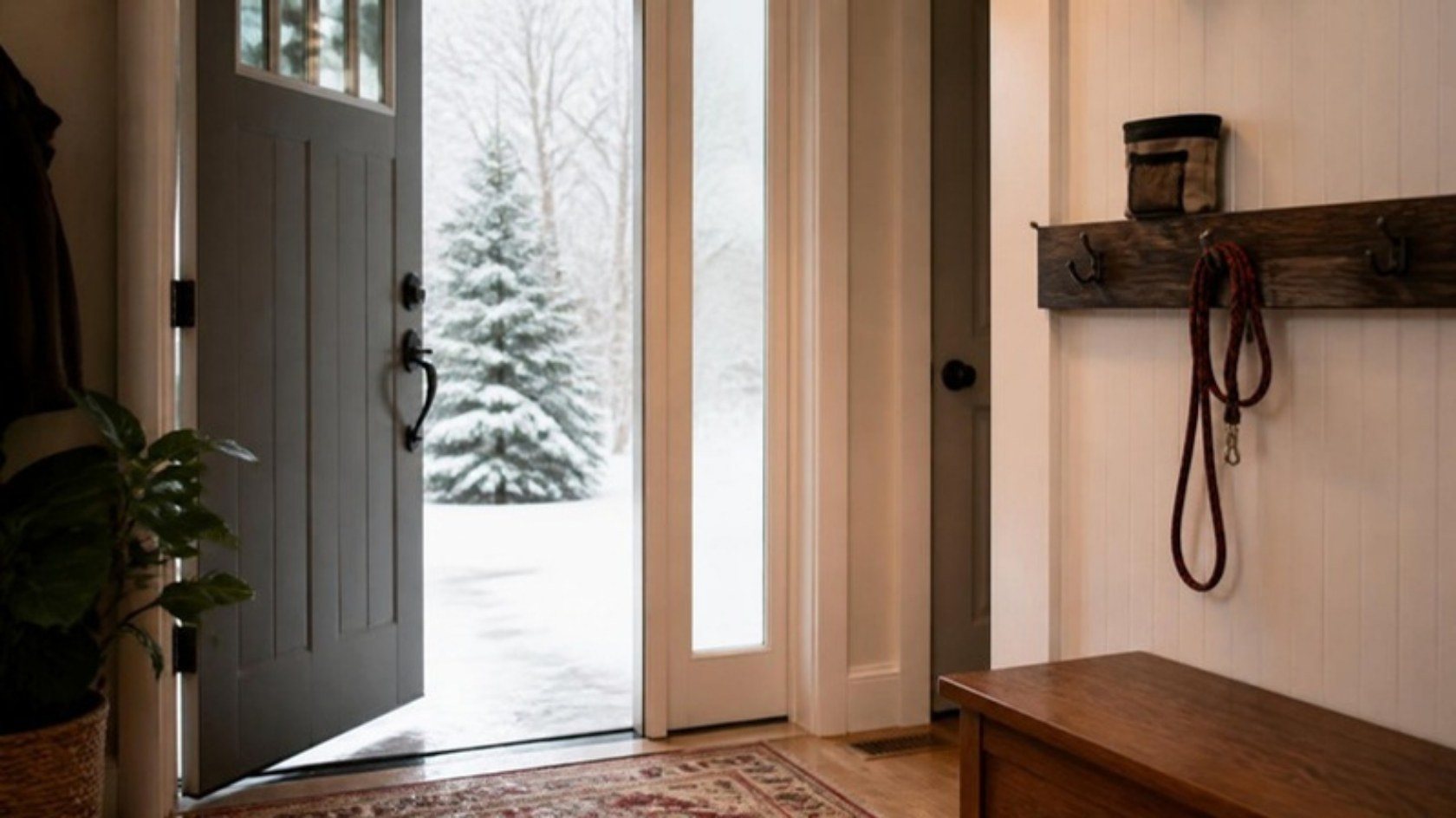
In winter, the area right outside the door can be frozen, packed with snow, or covered in slush. A small dog that dashes out may slip, or end up on a cold, icy street.
- Check the step outside before you let your dog out on a walk.
- Keep the leash on before the door opens, especially on icy days.
- Practice indoors on cold days, with the door barely open for a short moment, so warm air stays in.
- Wipe paws and dry your dog after coming back in, near the door.
For more on snow, cold, and icy sidewalks, see Walking a Small Dog After Dark: Winter Evenings in Sapporo.
Guests and deliveries: gates and carriers
Real visits move faster than practice sessions. While your dog is still learning, it can help to manage the door instead of relying on the “wait” alone.
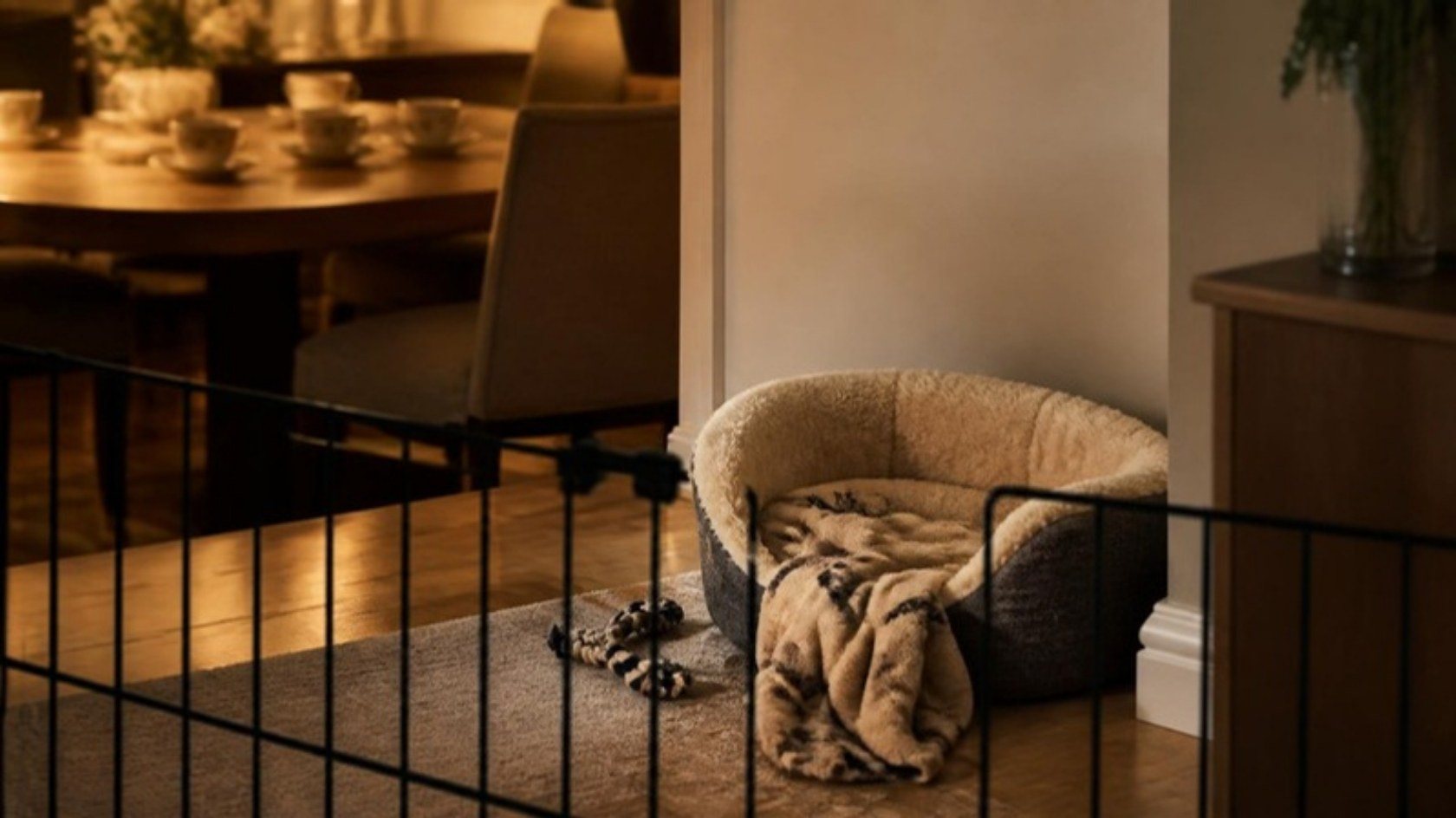
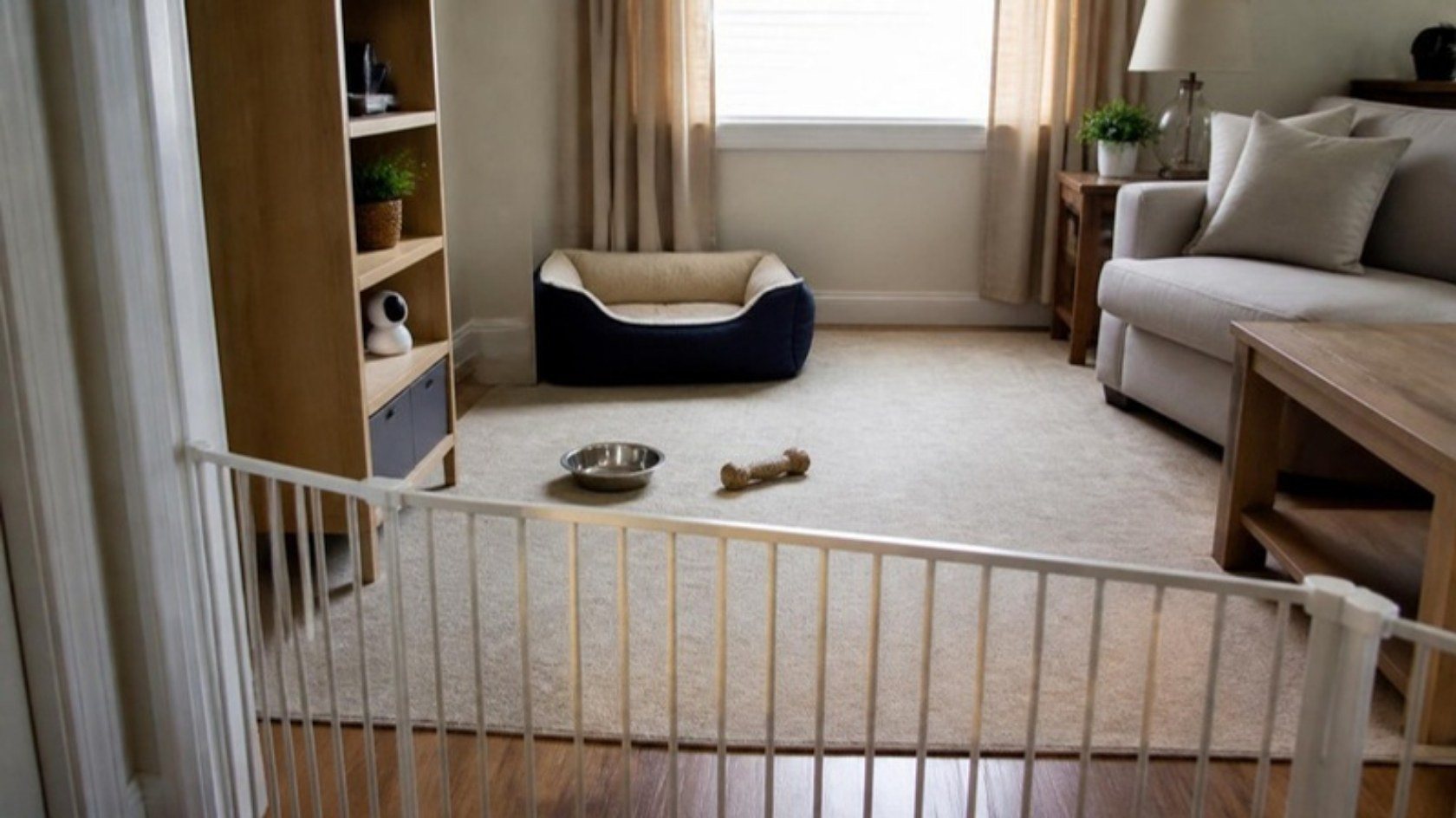
- A baby gate or pet gate: placed between the entrance and the rest of the home, it keeps your dog back while the door is open.
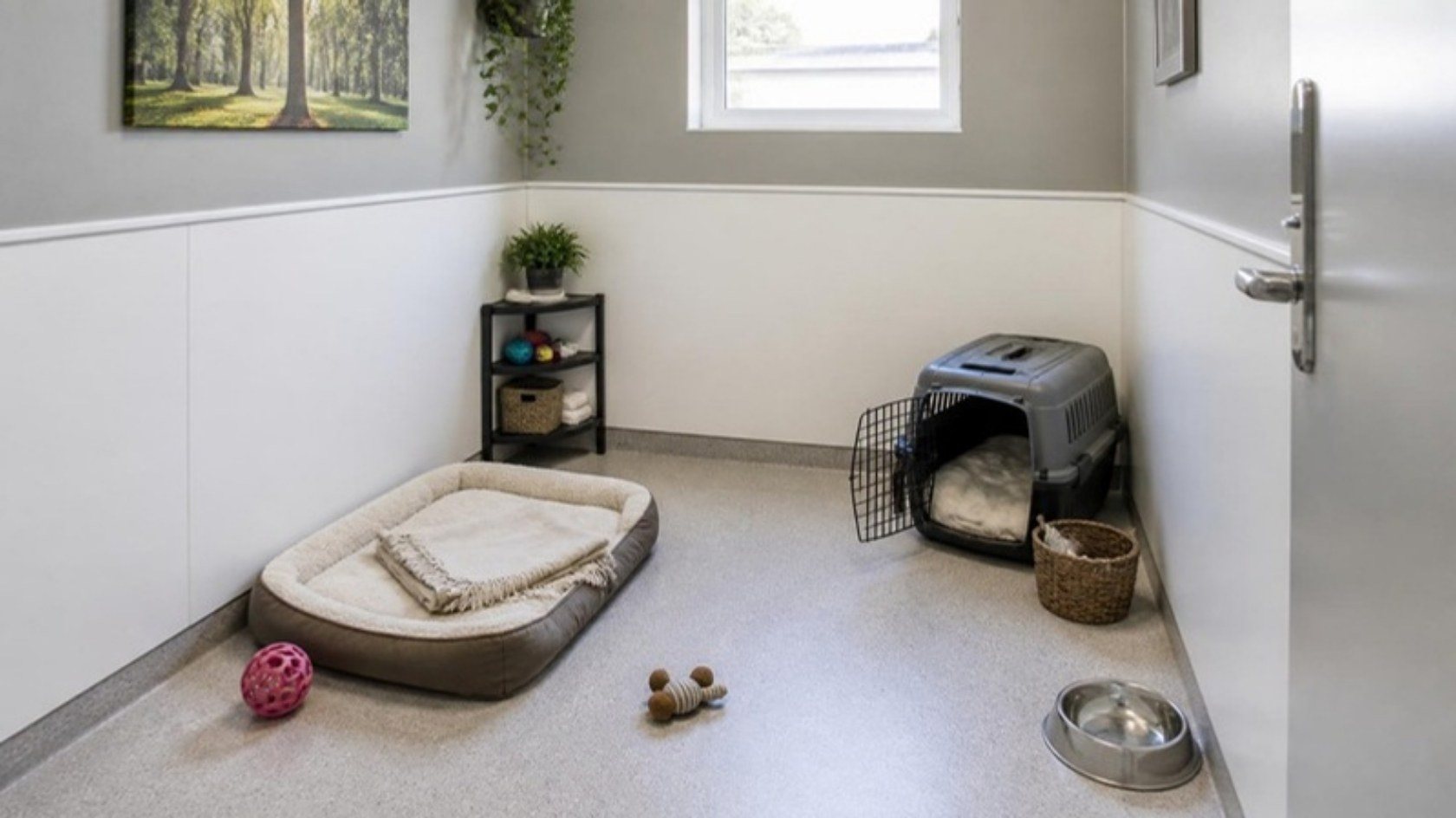
- A closed room: your dog rests in another room until the guest is inside or the delivery is done.
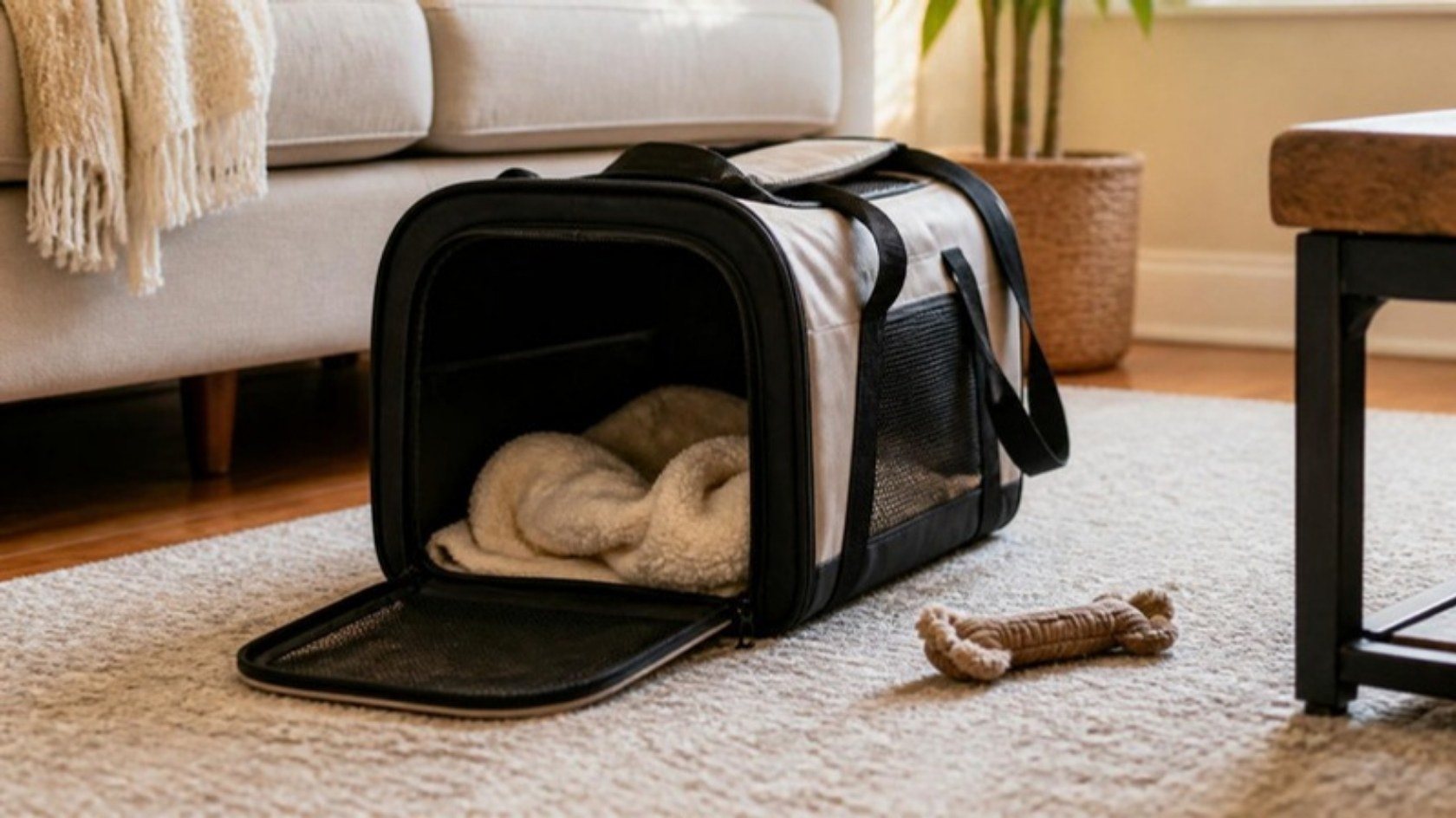
- A carrier: a dog that is comfortable in its carrier can rest there for a short time while the door is open.
- A leash: clip it on before you answer the bell.
My post Helping a Small Dog Stay Calm When Guests Visit: A Simple Plan covers a quiet resting spot and front door safety when guests come over. If you want to use a carrier at the door, Carrier Training for a Small Dog: A Step-by-Step Guide explains how to help your dog feel relaxed inside one, step by step.
When progress stalls
Some dogs take longer than others, and that is fine. If your dog keeps rushing the door, seems anxious, barks a lot when the bell rings, or if you are unsure what to try next, a dog trainer who uses reward-based methods can watch your dog and help you plan. If you notice anything about your dog’s body or behavior that worries you, please ask your vet.
Short sessions, treats, a door that opens a little at a time, and the same words from everyone at home: these simple pieces can add up to a calmer front door. Go at your dog’s pace, keep a gate or leash as backup, and take extra care on icy winter days.
FAQ
How long should each door practice session be?
Short sessions of a few minutes are enough. Stop while your dog is still calm and interested, and try again later in the day.
What is a release word, and why use one?
A release word, such as “okay” or “free,” tells your dog the wait is over. Using it every time helps your dog learn that the wait ends with the word, not with the door opening.
What if my dog still runs to the door when guests arrive?
While your dog is learning, use a gate, a closed room, a carrier, or a leash when guests or deliveries come. If progress stalls, ask a dog trainer who uses reward-based methods for help.