Choosing a Dog Bed for a Cold Apartment in Winter: What to Check
Contents
- Start with how your dog sleeps
- Getting the size right
- Lifting the bed off a cold floor
- Where to put the bed: avoiding drafts
- Washable covers for winter
- If your dog chews
- Electric warming products: follow the maker’s instructions
- FAQ
- What size dog bed should I choose?
- Where should I put a dog bed in a cold apartment?
- Is it safe to use an electric warming mat for my dog?
In short: a dog bed for a cold apartment is easier to choose if you start with how your dog sleeps and where the bed will go. Watch whether your dog curls up in a ball or stretches out, and pick a size and shape that fits that sleeping style. Keep the bed off a cold floor with a raised design or a thick base, and place it away from windows, the front door, and other drafty spots. A washable cover makes winter care simpler. If your dog chews, look for sturdy materials and take away any pieces that come loose. If you use an electric warming product, follow the maker’s instructions and keep the cord out of reach.
In a Sapporo winter, the air near the heater may be warm while the floor by the window or the front door stays cold. This post walks through the points to check when you choose a dog bed, and where to put it.
Please read this first: this post is a set of general ideas for choosing a dog bed in winter. It is not about my own dog, and it is not expert advice. I am not a veterinarian, and I can’t judge your dog’s body. If you are worried about how your dog handles the cold, how it sleeps, or anything about its body, please ask your vet.
Start with how your dog sleeps
Before you look at beds, spend a few days watching your dog rest. The way it lies down can help you think about size and shape.
| Sleeping style | What it looks like | Bed shapes to consider |
|---|---|---|
| Curling up | Your dog tucks into a ball, nose near the tail | A round or oval bed with raised sides to lean against |
| Stretching out | Your dog lies flat on its side with legs out | A flat, rectangular mat or cushion with room for the legs |
| Burrowing | Your dog pushes under blankets or into gaps | A bed with a soft cover or a hooded top it can crawl under |
Getting the size right
A bed that is too small can leave your dog’s legs or head hanging over the edge onto the cold floor. A bed that is far too big may not feel snug for a dog that likes to curl up.
- Measure your dog lying down, stretched out, from nose to the base of the tail.
- Compare that number with the size chart for the bed you are looking at.
- Allow some extra room if your dog likes to stretch or change position.
- Check the inside measurement for beds with thick raised sides.
Lifting the bed off a cold floor
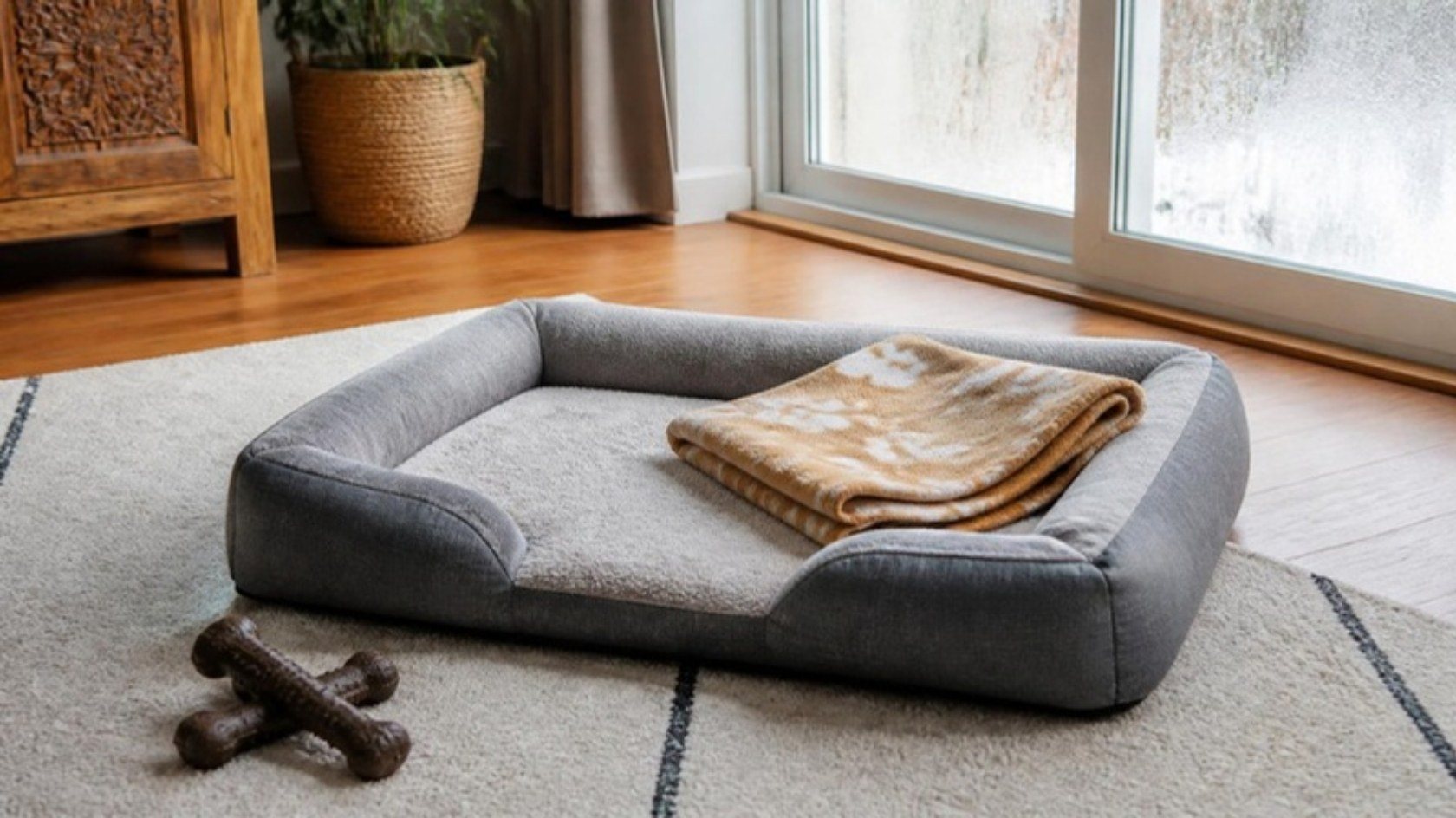
In an apartment, cold can come up through the floor, for example near outside walls. A thin cushion placed straight on the floor may not keep much of that cold away.
- A raised bed. Some beds sit on a frame with legs, so the sleeping surface is above the floor.
- A thick base. A firm, thick bottom layer puts more material between your dog and the floor.
- A rug or mat underneath. Placing the bed on a rug or a mat can add a layer between the bed and a hard floor.
- Easy access. For a small dog, a raised bed should be low enough to step onto without jumping.
If your dog has trouble getting in and out of a raised bed, a lower, thicker design may suit it better. If you notice your dog moving stiffly or avoiding stepping up, ask your vet.
Where to put the bed: avoiding drafts
The spot you choose matters as much as the bed itself. Cold air can come in around windows, sliding doors, and the front door.
| Spot in the apartment | What to think about |
|---|---|
| Next to a window or balcony door | Cold air and a chilly glass surface; choose another spot if you can |
| Near the front door | Cold air can come in each time the door opens |
| Right beside a heater or stove | Too close to direct heat; keep the bed at a safe distance |
| A quiet corner of the living room | Often away from drafts and close to the family; feel the floor there too |
A few tips for choosing the spot:
- Feel the floor with your hand in a few places on a cold morning, and look for a warmer area.
- Give your dog a choice. Leaving open floor around the bed, away from direct heat and cold drafts, lets your dog move to a spot that feels right.
My post Your First Sapporo Winter with a Small Dog: A Simple Checklist covers heater safety and dry indoor air, along with snow and icy sidewalks outside.
Washable covers for winter
Winter walks bring snow, slush, and grit into the home, and some of it can end up on the bed.
- A removable cover that unzips makes washing simpler.
- Check the care label to see whether the cover and the inner cushion can go in a washing machine.
- Consider a spare cover or a washable blanket, so your dog has something clean while one is drying.
If your dog chews
Some dogs chew their beds. A chewed bed can lose its filling, and small pieces can be swallowed.
- Look for sturdy fabric and seams, and check that zips are hidden or covered.
- Check the bed regularly for holes, loose threads, and exposed filling.
- Take the bed away if pieces start coming off, and replace it with a sturdier option.
- Offer chew toys made for dogs, so your dog has something suitable to chew instead.
If you think your dog may have swallowed part of a bed, contact your vet. On days spent indoors, play can give your dog something else to do; Indoor Play Ideas for a Small Dog on Snowy Days has sniffing games, short training games, and tips for keeping small objects and cords out of reach.
Electric warming products: follow the maker’s instructions
Some owners use electric pet mats or other warming products in winter. If you use one, take extra care.
- Read and follow the maker’s instructions, including any notes on use with pets and how long to leave it on.
- Keep the cord out of reach. Run it behind furniture or use a cord cover so your dog can’t chew it.
- Leave a cooler area in or beside the bed, so your dog can move off the warm part.
- Don’t leave a dog that chews alone with an electric product.
- Check the product and cord for damage, and stop using it if anything looks wrong.
A non-electric option, such as a thicker bed or a soft blanket your dog can burrow into, may be simpler for a dog that chews. Check blankets for chewing and loose threads too.
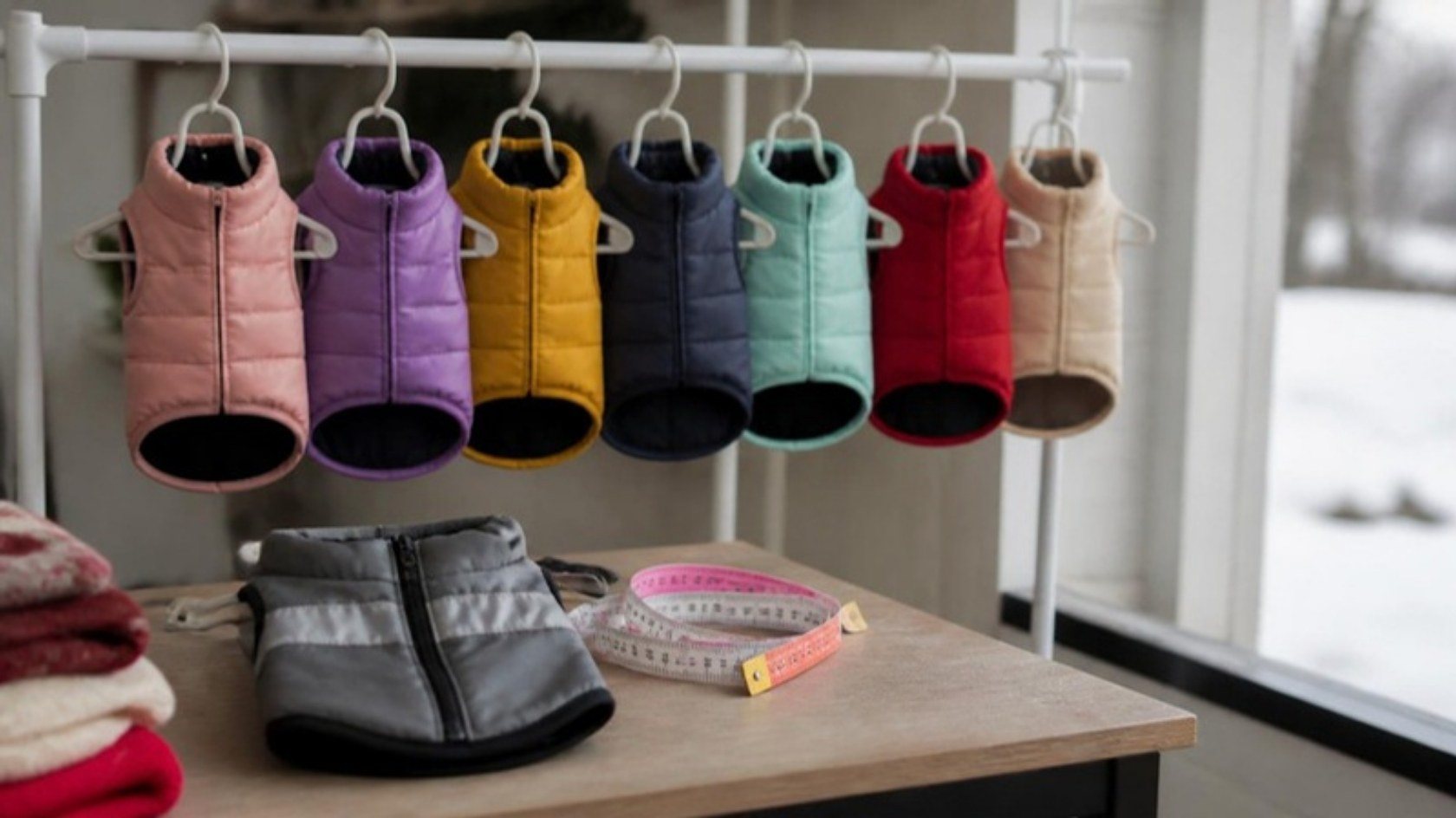
For walks, Choosing a Winter Coat for a Small Dog in Sapporo: What to Check explains measuring and fit, and why taking the coat off indoors helps keep your dog from getting too warm.
Watch how your dog sleeps, choose a bed that fits that style, keep it off the cold floor and away from drafts, and pick a cover you can wash. If your dog chews or you use an electric warming product, take extra care with loose pieces and cords. If anything about your dog’s sleep or body worries you, ask your vet.
FAQ
What size dog bed should I choose?
Measure your dog lying stretched out, from nose to the base of the tail, and compare that with the bed’s size chart. A dog that curls up may like a snug, round bed, while a dog that stretches out may need a longer, flat one.
Where should I put a dog bed in a cold apartment?
Choose a spot away from windows, balcony doors, and the front door, where cold air can come in. Keep it a safe distance from heaters, and add a rug or mat underneath if the floor feels cold.
Is it safe to use an electric warming mat for my dog?
If you use one, follow the maker’s instructions, keep the cord out of reach, and leave a cooler area so your dog can move off the warm part. For a dog that chews, a non-electric option may be simpler. If you have questions about your dog, ask your vet.