Paw Care After Snowy Walks in Sapporo: Wipe, Rinse, and Dry
Contents
- Why paw care matters after a snowy walk
- De-icing materials on Sapporo’s winter roads and sidewalks
- How to clean your dog’s paws after a snowy walk: a simple routine at the door
- Snowballs (ice balls) between your dog’s toes
- Dog boots and paw balm: some dogs like them, some don’t
- When to ask your vet
- FAQ
- Should I wash my dog’s paws after every winter walk?
- Does Sapporo use de-icing materials on sidewalks?
- Does my small dog need dog boots in Sapporo?
In short: after a snowy walk, many owners wipe their dog’s paws, rinse them with lukewarm water if needed, and dry them well, including between the toes. In Sapporo, the city spreads anti-freezing agents and anti-slip materials on roads and sidewalks in winter, so a quick paw routine at the door is a simple habit worth building.
Snow is fun for many small dogs. They push their noses into it, run through fresh powder, and come home with white, icy feet. Then the question is: what do you do at the front door?
This post is a set of general habits that many owners use after winter walks. It is not about my own dog, and it is not expert advice. I am not a veterinarian. Every dog is different, so if you have any question about your dog’s paws or skin, please ask your vet.
Why paw care matters after a snowy walk
A small dog’s paws touch everything on a winter sidewalk: fresh snow, packed snow, slush, ice, sand, and whatever else is on the ground. Small dogs are also close to the ground, so their legs and belly often get wet and dirty, too.
Three things come home with your dog after many winter walks:
- Snow and ice in the fur. Snow can stick to the fur on the feet and between the toes and turn into small ice balls.
- Water. Melting snow leaves the paws and legs wet. Wet fur in a cold entrance can stay cold for a while.
- Whatever was on the sidewalk. Sand, small gravel, dirt, and de-icing materials can stick to paws and fur.
A short routine at the door takes care of all three. It does not need special products. A towel, some lukewarm water, and a few minutes are enough for many owners.
De-icing materials on Sapporo’s winter roads and sidewalks
If you live in Sapporo or visit in winter, it helps to know what may be on the ground.
The City of Sapporo’s page on icy road measures says the city spreads anti-freezing agents and anti-slip materials on roads. According to the same page:
| Where | What the city’s page says |
|---|---|
| Main roads | Mainly anti-freezing agents, spread by truck |
| Slopes on neighborhood roads | Anti-slip materials, spread by truck; sand boxes are also placed |
| Sidewalks | Spread mainly by hand, with sidewalk spreading vehicles in some places; sand boxes are placed where many people walk |
| Timing | Planned based on patrols and weather information |
Source: City of Sapporo, icy road measures (Japanese). The city’s Q&A page on slippery roads also says the city spreads anti-slip material on sidewalks and crosswalks with heavy foot traffic, and places sand boxes downtown and near subway stations so people can spread sand themselves (City of Sapporo Q&A, Japanese).
So, on a winter walk in the city, your dog may step on sand, gravel, and other materials spread on the roads, especially on busy sidewalks, crossings, and slopes. That is one good reason to clean paws after every walk, not only after the very snowy ones. It is also a good reason not to let your dog lick or eat snow from the roadside.
How to clean your dog’s paws after a snowy walk: a simple routine at the door
Here is one common routine. Use it as a starting point and change it to fit your dog and your home.
| Step | What many owners do | Point to notice |
|---|---|---|
| 1. Before going in | Gently brush or shake off loose snow at the entrance | Keeps most of the snow outside |
| 2. Wipe | Wipe each paw, the legs, and the belly with a towel or damp cloth | Small dogs often get a wet, dirty belly |
| 3. Rinse (if needed) | Rinse the paws with lukewarm water, or dip them in a small basin | Lukewarm, not hot. Cold paws and hot water are not a good match |
| 4. Check between the toes | Look for ice balls, sand, or small stones in the fur | Melt ice balls with lukewarm water; don’t pull them out |
| 5. Dry well | Dry the paws, between the toes, and the legs with a dry towel | Leaving fur damp in a cold entrance is what many owners try to avoid |
| 6. Final look | Take a quick look at each paw | If anything seems unusual, ask your vet |
A few small tips that many owners find helpful:
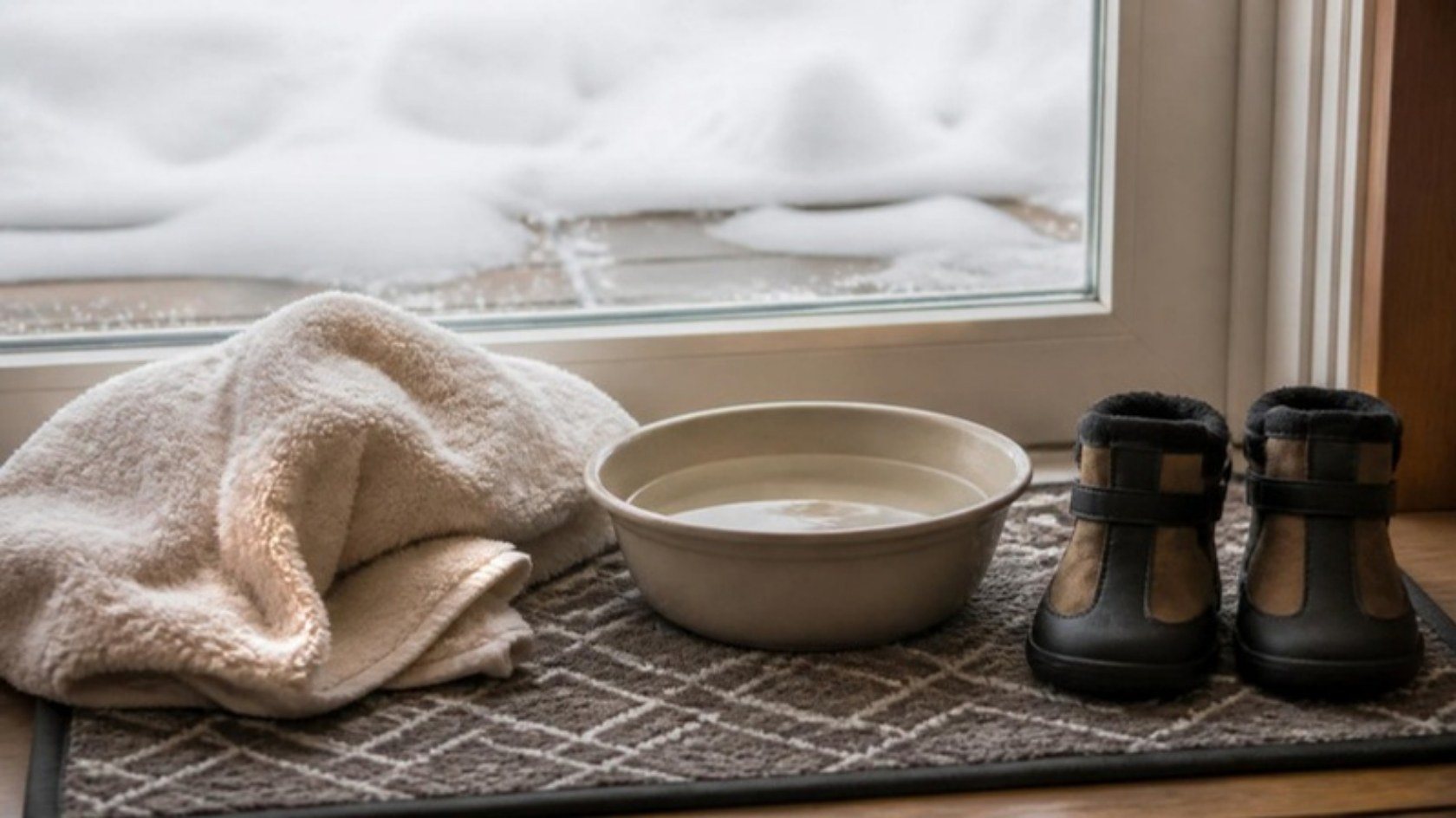
- Keep a “paw kit” at the door. Two towels (one damp, one dry), a small basin, and maybe a mat. If everything is in one place, the routine is easy to repeat.
- Practice when it is not snowing. Some dogs don’t like having their paws touched. Short, calm practice at home, with praise, can make winter wiping easier.
- Dry between the toes. The fur between the toes and pads holds water. A dry towel pressed gently between the toes helps.
- If you use a hair dryer, keep it on a low setting, at a distance, and watch how your dog reacts.
Snowballs (ice balls) between your dog’s toes
If your dog has long or fluffy fur on the feet, you may see little balls of ice stuck between the toes or on the legs after a walk. Some dogs walk on them without a problem. Others stop, lift a paw, or try to bite them off.
A few general habits:
- Melt, don’t pull. Pulling an ice ball can pull the fur with it. Lukewarm water or a warm, damp towel melts it gently.
- Check during the walk, too. On a long walk in fresh snow, some owners stop now and then to remove snow from the paws.
- Fur length on the feet. Some owners ask a groomer to keep the fur on the feet and between the pads short in winter. If you want to ask about this, see my list of questions to ask a dog groomer.
Dog boots and paw balm: some dogs like them, some don’t
You will see dog boots and protective paw balm in pet shops. Both are options, not requirements. Some dogs accept them easily, and some don’t like them at all.
- Dog boots can help keep snow, slush, and de-icing materials off the paws. But some dogs refuse to walk in them, and fit matters.
- Protective paw balm or wax is something some owners put on in a thin layer before a walk. Read the label, and note that some dogs lick it off.
- Nothing extra is also common. Many dogs walk in winter with bare paws, and the wipe-rinse-dry routine does the work.
If you want to try boots, start indoors. Put on one or two boots for a few seconds, give praise, and take them off. Slowly make the time longer. If your dog clearly hates them, it is fine to stop. The after-walk routine still works without them.
If you are not sure whether boots or balm suit your dog, or if your dog has sensitive skin, please ask your vet before you try a new product.
When to ask your vet
I want to keep this simple: if something about your dog’s paws seems unusual to you, or your dog seems uncomfortable after walks, please ask your vet. Don’t try to guess the cause yourself, and don’t try products at random. Your vet can look at your dog and tell you what fits.
For more about the whole winter season, see Your First Sapporo Winter with a Small Dog: A Simple Checklist. On days when the weather is too rough for a long walk, my indoor play ideas for snowy days may help.
A towel at the door, a little lukewarm water, and a few minutes of drying can make every winter walk end well. Enjoy the snow together.
FAQ
Should I wash my dog’s paws after every winter walk?
Many owners at least wipe and dry the paws after every winter walk, because sidewalks may have sand, gravel, or de-icing materials on them. Rinsing with lukewarm water is a common extra step when the paws are very dirty or icy. If you are not sure what is right for your dog, ask your vet.
Does Sapporo use de-icing materials on sidewalks?
The City of Sapporo’s page on icy road measures says the city spreads anti-freezing agents and anti-slip materials, and that sidewalks are treated mainly by hand, with sidewalk spreading vehicles in some places. The city’s Q&A page also says anti-slip material is spread on busy sidewalks and crosswalks. Please see the city’s page for details.
Does my small dog need dog boots in Sapporo?
Not necessarily. Some dogs accept boots and some don’t like them at all. Many dogs walk in winter without boots, and owners clean and dry the paws after each walk. If you are unsure, ask your vet.
Sources checked: City of Sapporo, 凍結路面対策 (icy road measures) (Japanese), City of Sapporo Q&A, 道路がつるつるで危ないけど、どうにかならないの? (Japanese). City practices can change, so please check the latest information on the city’s pages.