Brushing a Small Dog at Home: A Routine Between Grooming Visits
Contents
- Why brush between grooming visits
- Brush types: a quick general guide
- A simple home brushing routine, step by step
- Start short and use treats
- Tangles and mats: leave the cutting to your groomer
- Brushing after snowy walks in Sapporo
- FAQ
- How often should I brush my small dog at home?
- Can I cut out a mat in my dog’s coat with scissors?
- Should I brush my dog right after a snowy walk?
In short: brushing at home can be a calm, short routine. Pick a brush or comb that suits your dog’s coat (your groomer can suggest a type), start with very short sessions, and use treats and praise so your dog connects brushing with good things. Brush gently, a small section at a time, and stop before your dog gets restless. If you find a tangle or mat, don’t try to cut it out with scissors; ask your groomer at the next visit. In a Sapporo winter, remove snowballs and dry your dog after a walk before you start brushing.
If your small dog has a coat that keeps growing, the groomer probably does the big jobs: the cut, the bath, the full tidy-up. But between visits, the coat keeps growing and moving. A few minutes of brushing at home can help keep things manageable, and it can also give you a quiet moment to look over your dog.
Please read this first: this post is a set of general ideas for brushing a dog at home. It is not about my own dog, and it is not expert advice. I am not a groomer or a veterinarian. Coats and dogs differ a lot, so please follow your groomer’s advice for your dog’s coat, and if you notice anything on your dog’s skin or body that worries you, please ask your vet.
Why brush between grooming visits
Home brushing is not a replacement for a groomer. Think of it as small, regular care that sits between visits. It can help you:
- Notice tangles early, while they are still small and easy to point out to your groomer.
- Get your dog used to being handled, which may make grooming visits feel more familiar.
- Check on your dog, such as noticing burrs, bits of snow, or anything that looks different from usual.
Brush types: a quick general guide
There are many kinds of brushes and combs. This is not a buying guide, just a general picture. Which ones suit your dog depends on the coat type and length, so a simple first step is to ask your groomer what they use and recommend for your dog.
| Tool | What it is like | General points |
|---|---|---|
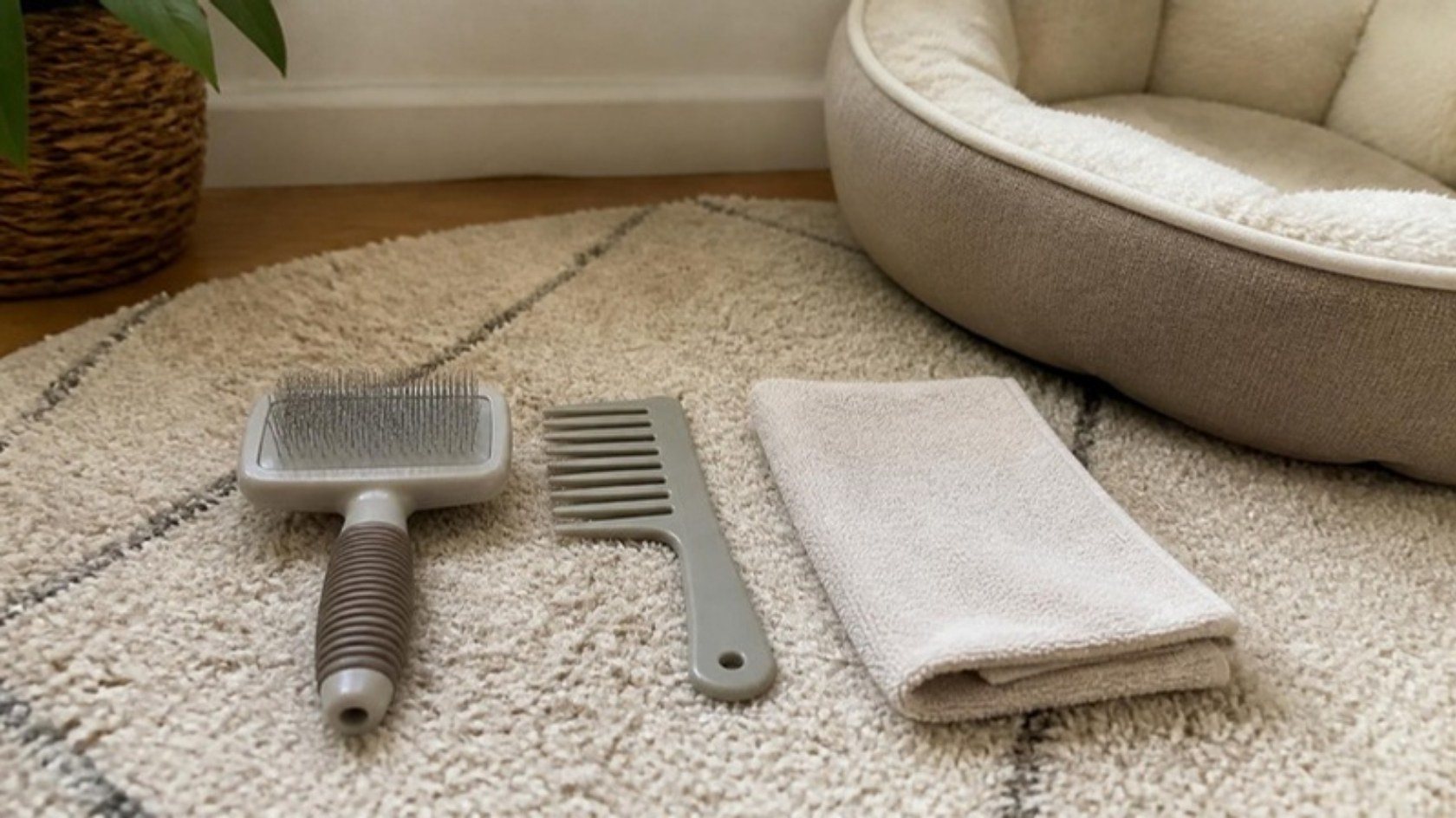
| Slicker brush | Many fine, bent wire pins on a flat pad | Use a light touch; pressing hard can be uncomfortable for your dog |
| Pin brush | Longer pins, often with rounded tips | Often used on longer coats for gentle, general brushing |
| Bristle brush | Soft natural or synthetic bristles | A gentle finish on the top of the coat |
| Metal comb | A comb with wide and narrow teeth | Useful for checking whether the coat is tangle-free after brushing |
Whatever you use, test it lightly on your own arm first. If it feels scratchy on your skin, it is a sign to use a lighter hand on your dog.
A simple home brushing routine, step by step
Here is one way to plan a short session. There is no fixed timeline. Adjust it to your dog.
| Step | What to do | Point to notice |
|---|---|---|
| 1. Choose a calm time | Brush after a walk or a nap, when your dog is relaxed | Avoid times when your dog is excited or hungry for a meal |
| 2. Set up | Use a non-slip mat or towel on the floor or your lap | A steady footing can help your dog feel safe |
| 3. Start with touch | Stroke your dog with your hand, then let it sniff the brush | Give a treat for staying calm |
| 4. Brush one small area | Start on the back or side, brushing in the direction the coat grows | Short, gentle strokes; a few strokes is enough at first |
| 5. Add areas slowly | Over many sessions, add the chest, legs, and tail | Leave the face, ears, belly, and paws until your dog is comfortable |
| 6. Check with a comb | Gently run a comb through the brushed area | If the comb catches, note the spot for your groomer |
| 7. End on a good note | Finish before your dog wants to leave, with praise and a treat | A short, happy session is better than a long one |
The key idea is the same as with other training at home: each step should feel easy for your dog. If your dog seems unsure, go back to the step before.
Start short and use treats
For a dog that is new to brushing, even a few seconds can be a good first session. Some simple habits:
- Keep sessions short. It is fine to brush one leg today and another leg tomorrow.
- Pair brushing with treats. A small treat after a few calm strokes helps your dog connect the brush with good things.
- Praise calm behavior. A quiet “good” in a soft voice while you brush.
- Let your dog take a break. If your dog moves away, let it go and try again later.
Signs that it may be time to stop for now include pulling away, turning to look at or mouth the brush, licking lips, yawning often, or seeming tense. End the session calmly and make the next one shorter.
Tangles and mats: leave the cutting to your groomer
When you find a tangle, it is tempting to grab the scissors. Please don’t. Mats can sit very close to the skin, and it is easy to cut the skin by accident, especially on a dog that moves.
Instead:
- Don’t pull hard. Tugging at a mat can hurt.
- Leave it as it is if it does not come apart easily with your fingers or a light touch of the comb.
- Make a note of where it is, and show your groomer at the next visit, or ask the salon whether you should come in sooner.
- Ask your vet if the skin under or around a mat looks red, wet, or different from usual, or if your dog reacts when you touch the area.
My post Questions to Ask a Dog Groomer: A Beginner’s Checklist covers what to tell your groomer and what to ask after a visit, so it is a good place to add your own questions about brushing at home.
Brushing after snowy walks in Sapporo
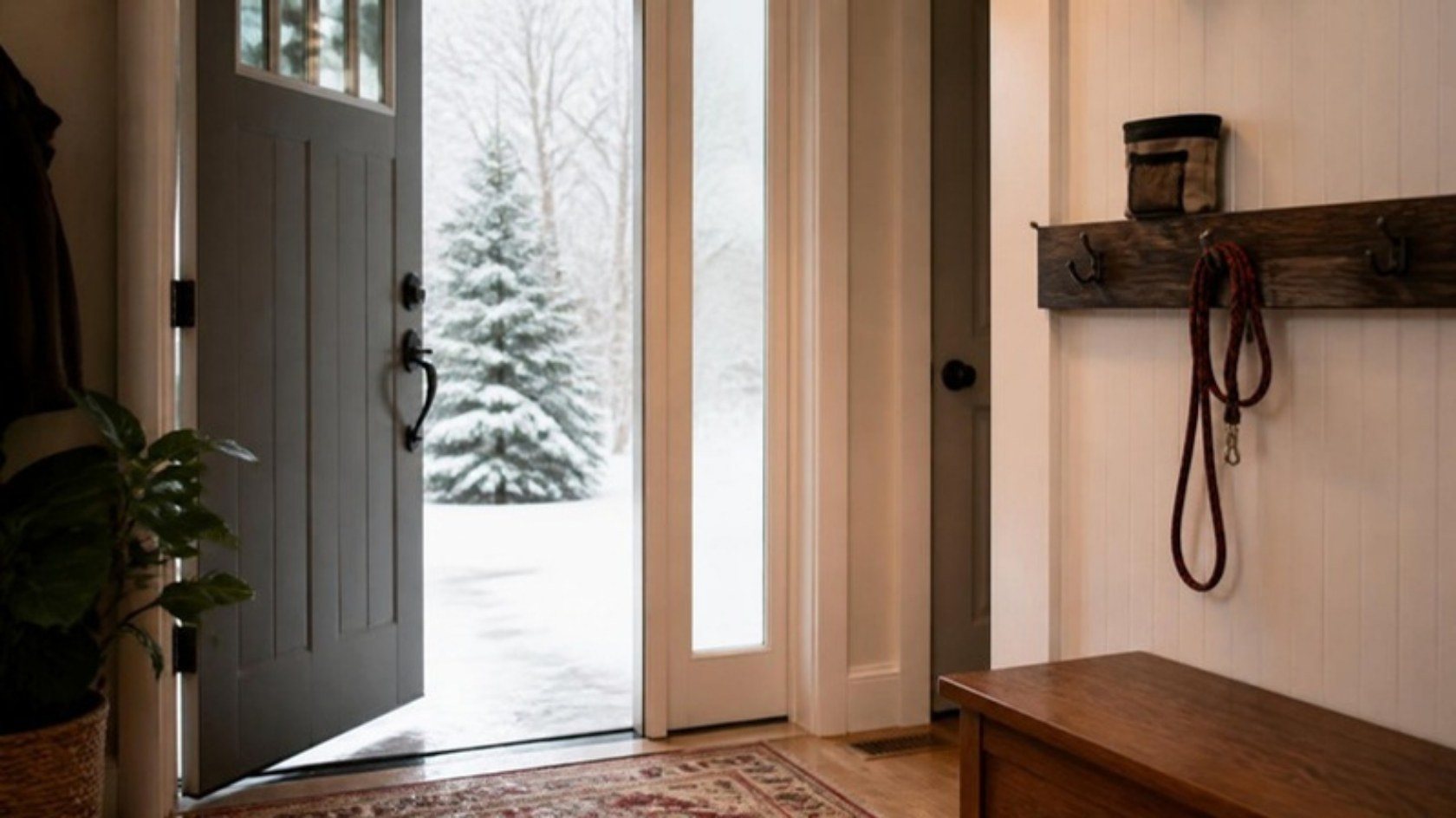
In winter, a walk in the snow can leave snowballs (ice balls) stuck in the coat, especially on the legs, belly, and between the toes. Brushing a frozen, wet coat can pull, so it helps to do things in order:
- Remove snowballs first. Melt them gently with lukewarm water or a warm, damp towel, instead of pulling them off.
- Dry your dog well. Towel dry the legs, belly, and paws, including between the toes.
- Brush when the coat is dry. Once your dog is dry and warm, a few gentle strokes can help you check for tangles that the snow may have caused.
For the full routine at the door, see Paw Care After Snowy Walks in Sapporo: Wipe, Rinse, and Dry. If the snowballs are hard to remove or keep coming back in the same places, your groomer may have ideas about coat length for winter.
Brushing does not have to be long or perfect. A calm minute or two, a treat, and a gentle hand can turn it into a small, regular part of your day with your dog.
FAQ
How often should I brush my small dog at home?
It depends on your dog’s coat type and length, so there is no single answer. Ask your groomer how often they suggest for your dog. For a dog that is new to brushing, short and frequent sessions are often easier to build into a routine than long ones.
Can I cut out a mat in my dog’s coat with scissors?
It is safer not to. Mats can be very close to the skin, and it is easy to cut the skin by accident. Leave the mat as it is and ask your groomer. If the skin around it looks unusual, or your dog reacts when you touch it, ask your vet.
Should I brush my dog right after a snowy walk?
Remove snowballs and dry your dog first. Brushing a wet or frozen coat can pull. Once your dog is dry and warm, gentle brushing can help you check for tangles.