Leaving a Small Dog Home Alone for a Short Time: A Gentle Plan
Contents
- Start with very short absences
- Keep leaving and coming home low-key
- Set up a safe space
- Water and room temperature
- Heater safety comes first in winter
- A pet camera is one option
- For longer absences, plan other care
- When to ask for help
- FAQ
- How do I start leaving my small dog alone?
- Should I leave the heater on for my dog in winter?
- What should I do if my dog barks or chews while I’m out?
In short: helping a small dog get used to short times alone can go more smoothly as a slow, calm routine. Start with very short absences and build up little by little. Keep leaving and coming home low-key, without a big goodbye or a big hello. Set up a safe space: put away cords, small objects, and anything your dog could swallow, and leave water within reach. In a Sapporo winter, put heater safety first, and don’t leave a heater that burns fuel running while you are out. A pet camera is one way to see how your dog is doing. For longer absences, think about a pet sitter or another care option. If barking, chewing, or other worries keep going, talk with a dog trainer or your vet.
Daily life can include a trip to the shop, an errand, or a quick appointment without the dog. This post walks through a simple plan for practicing short times alone, and for making the home safer while you are out.
Please read this first: this post is a set of general ideas for short times alone. It is not about my own dog, and it is not expert advice. I am not a veterinarian or a dog trainer, and I can’t judge your dog’s body or behavior. If your dog seems very worried when left, or if anything about its body or behavior concerns you, please talk with a dog trainer or your vet.
Start with very short absences
The idea is to let your dog learn, one small step at a time, that you leave and you come back. Move to the next step only when your dog stays relaxed at the current one. If your dog seems unsettled, go back to an easier step.
| Step | What you do | Move on when |
|---|---|---|
| 1. Another room | Step into another room and close the door for a moment, then come back | Your dog stays settled while you are out of sight |
| 2. A little longer | Stay in the other room a bit longer before coming back | Your dog rests or plays on its own |
| 3. The front door | Put on your shoes, step outside, and come straight back in | Your dog stays calm when the door closes |
| 4. A short walk away | Walk to the end of the hallway or the street and return | Your dog is relaxed when you come back |
| 5. A short errand | Go out for a quick errand and return | Your dog has stayed calm, as far as you can tell |
A few points to keep in mind:
- Keep sessions kind. Don’t scold your dog for anything that happened while you were out.
- Pick a calm moment. Practicing after a walk or play time, when your dog is ready to rest, can make things easier.
Keep leaving and coming home low-key
Keeping goodbyes and hellos quiet and ordinary can help your comings and goings feel like everyday events.
- Leaving: finish your preparations, then go out without a long goodbye.
- Coming home: take off your coat and put your bag down first. Greet your dog calmly once it has settled a little.
- Something to do: a safe chew toy or a food puzzle made for dogs can give your dog something to focus on as you go. Check that it is the right size and won’t break into small pieces.
If your dog has food limits, ask your vet which chews or treats are suitable.
Set up a safe space
Before you leave, look at the room from your dog’s height.
| What to check | Why it matters | What you can do |
|---|---|---|
| Electric cords and chargers | A dog may chew them | Unplug them, run them behind furniture, or use cord covers |
| Small objects | Coins, hair ties, and toy parts can be swallowed | Put them in drawers or on high shelves |
| Food and bins | Leftovers and rubbish can attract a dog | Store food away and use a bin with a lid |
| Bags and shoes | Contents may be harmful or easy to swallow | Keep bags closed and out of reach |
| Doors, gaps, and balconies | A dog may get stuck or slip out | Close doors to rooms you don’t need, and check the balcony door |
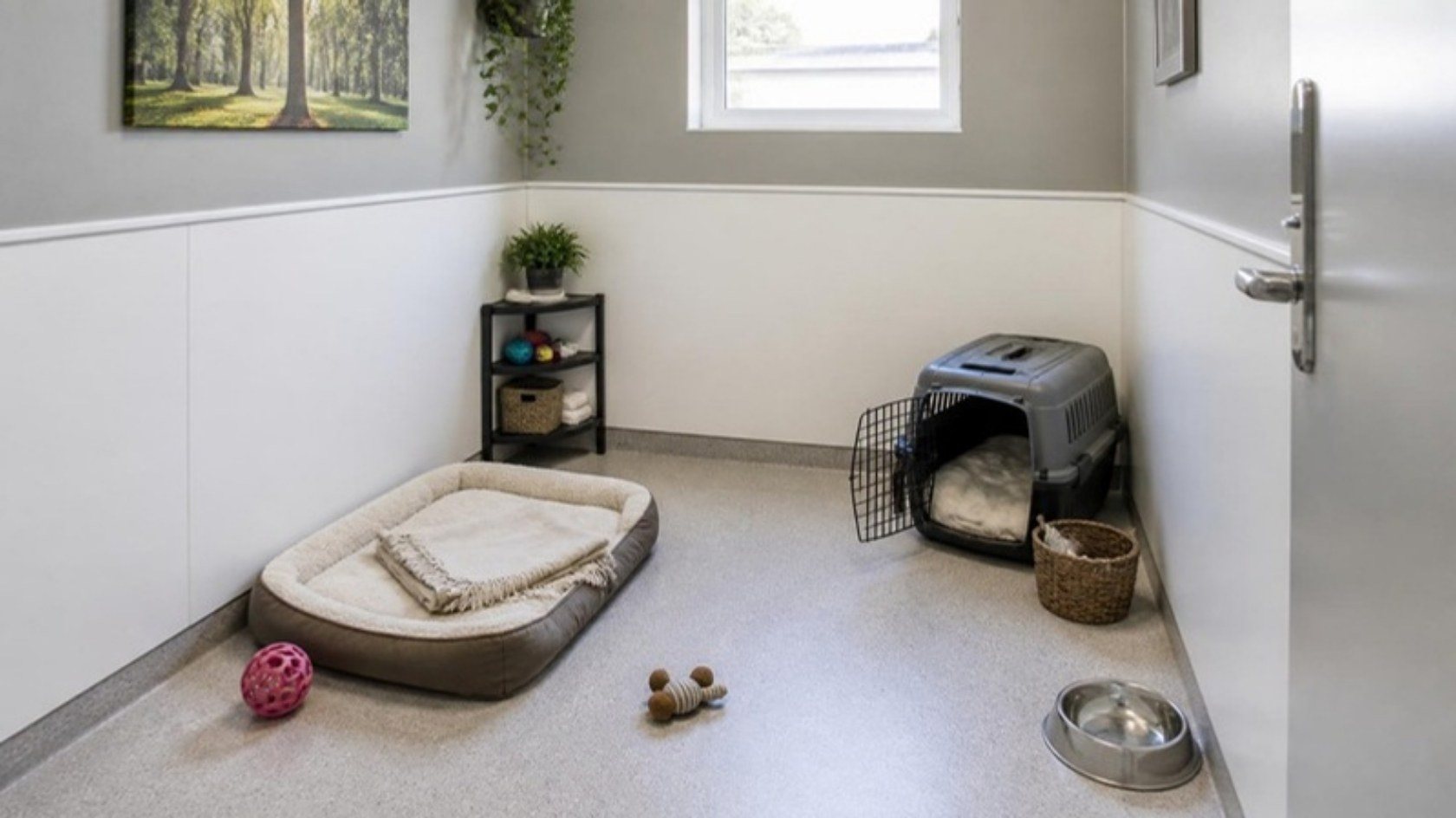
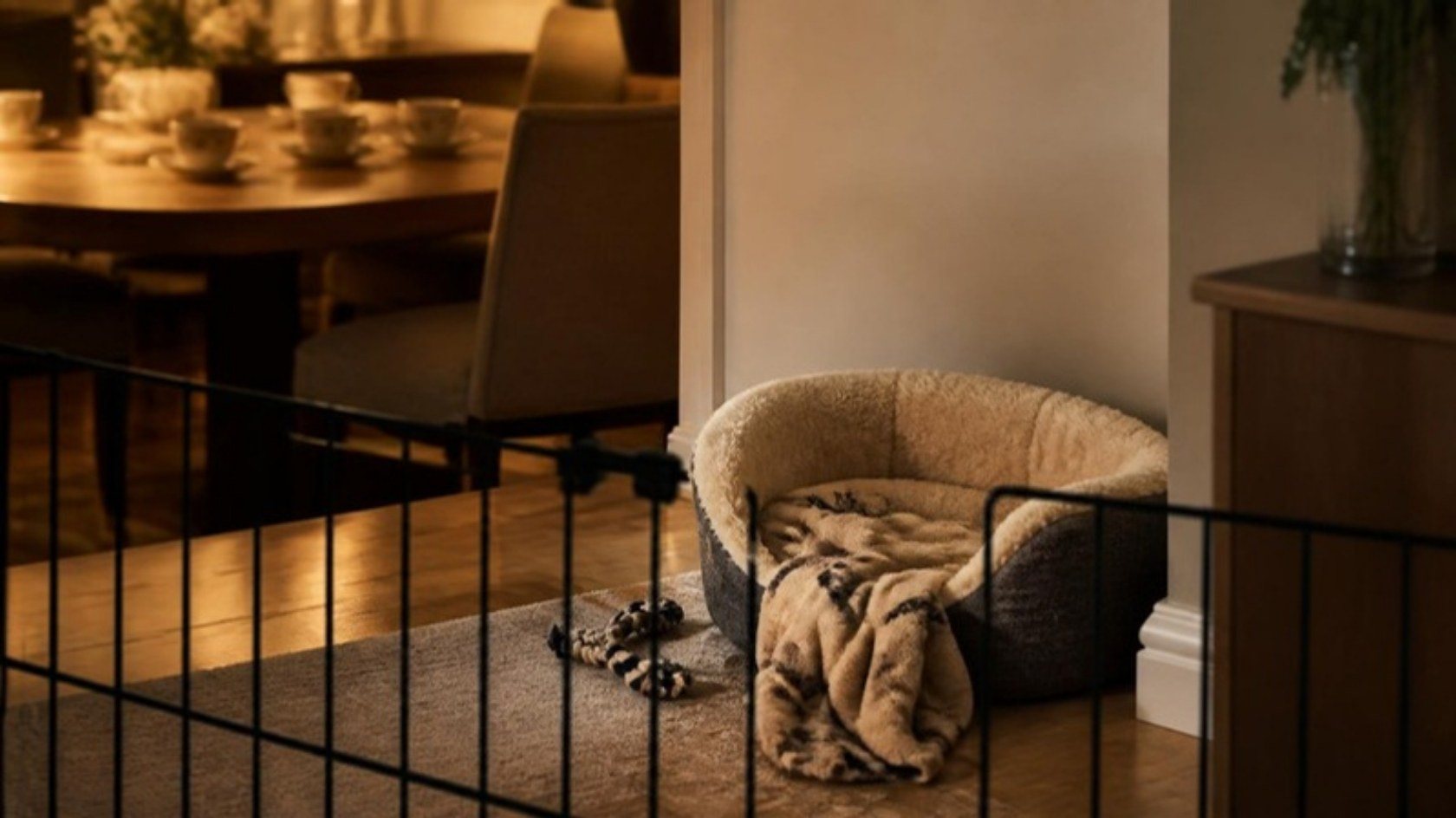
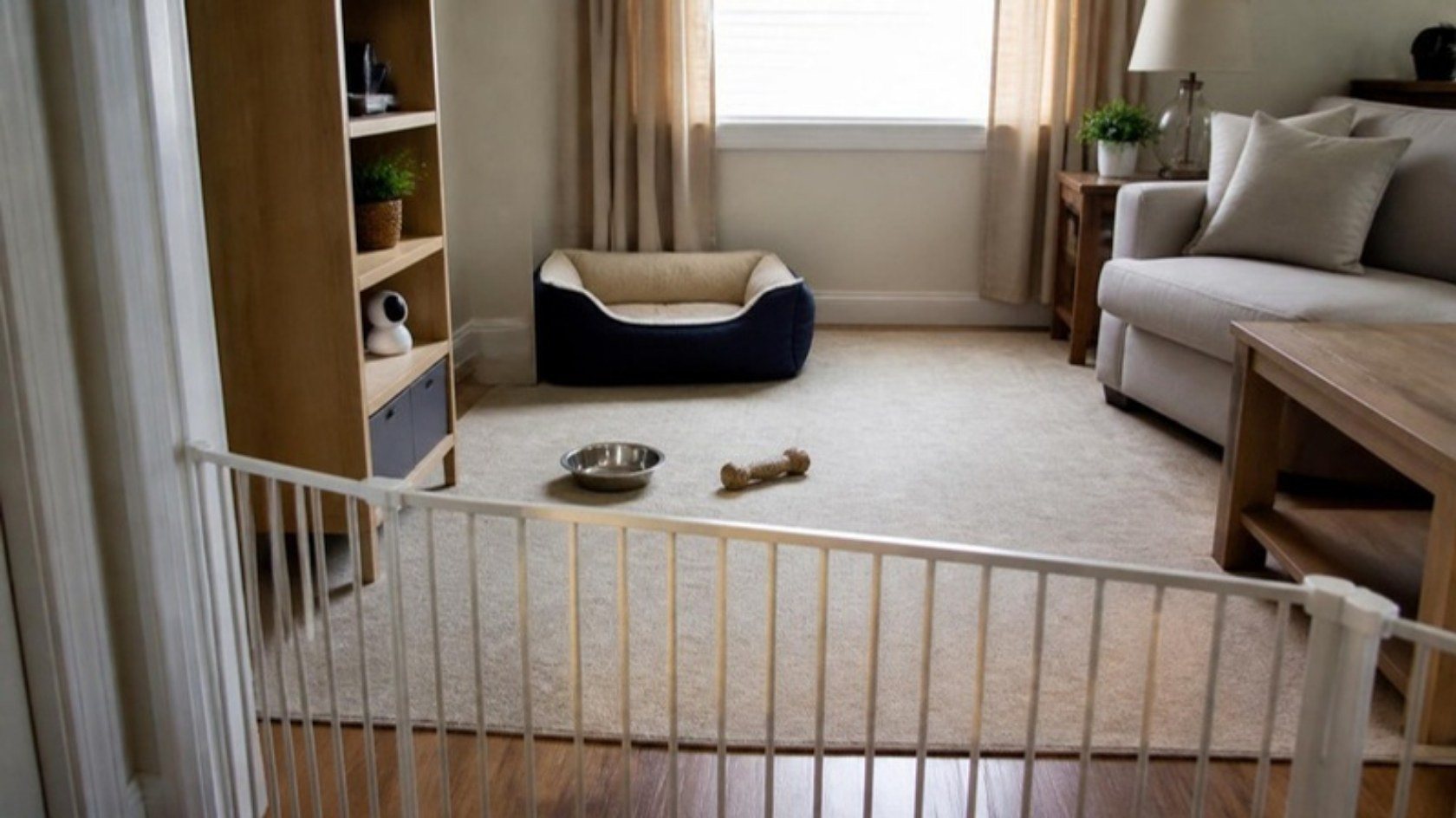
Some owners use a pen, a gate, or one dog-safe room so the space is smaller and easier to check. A bed or blanket your dog knows, and a few safe toys, can make the space feel familiar. My post Choosing a Dog Bed for a Cold Apartment in Winter: What to Check covers where to place a bed away from drafts and how to deal with chewing.
Water and room temperature
- Water: leave fresh water in a bowl that is hard to tip over. A second bowl in another spot can help if one gets knocked over.
- Room temperature: think about how warm or cold the room will be while you are out.
Heater safety comes first in winter
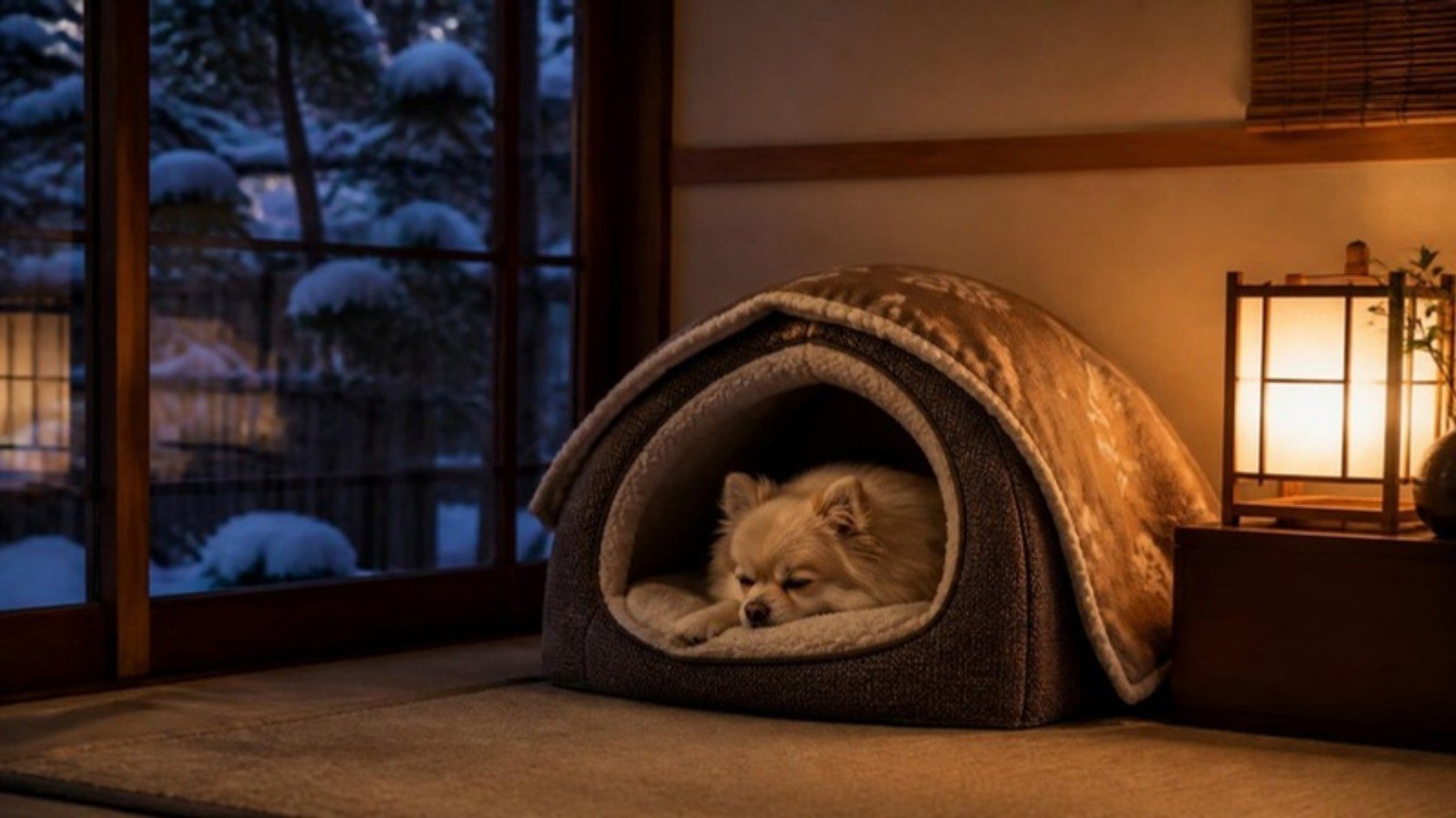
In a Sapporo winter, the room can get cold quickly. Even so, safety comes before warmth.
- Don’t leave a heater that burns fuel running while you are out, such as a kerosene or gas heater.
- Follow the maker’s instructions for any electric heater or warming product, including any notes on use with pets.
- Keep cords out of reach, and don’t leave a dog that chews alone with an electric product.
- Leave a cooler area in the room, so your dog can move away from a warm spot.
A pet camera is one option
Some owners use a pet camera to see whether their dog rests or seems unsettled while they are out. If you use one:
- Place it safely, with the cord out of your dog’s reach.
- Check the settings, such as who can view the camera and where recordings are stored.
A camera only shows you what happens. It can’t keep your dog safe, so the safe-space checks above still matter.
For longer absences, plan other care
Short times alone are one thing. For a long workday, an overnight trip, or a time when you are unsure how your dog will cope, it may be kinder to arrange care. Options include asking a family member or friend, a pet sitter who visits your home, or a dog hotel. My post Pet Sitter or Dog Hotel in Sapporo: 7 Questions to Ask First explains Japan’s registration rule for these businesses and what to ask before you book.
When to ask for help
Some dogs find being alone hard. Talk with a dog trainer or your vet if you notice things like:
- Barking or howling that keeps going while you are out, or that neighbors mention
- Chewing or scratching at doors, windows, or furniture that keeps happening
- Toilet accidents that don’t happen when you are home
- Signs that worry you when you leave or come back
A trainer can look at your practice plan, and your vet can check whether something about your dog’s body needs attention.
If your dog tends to rush the door when you leave, Teaching a Small Dog to Wait at the Door: A Step-by-Step Plan walks through a slow plan with treats and a release word.
Start with very short absences, keep goodbyes and hellos calm, and make the space safe before you go. Put heater safety first in winter, plan other care for longer days, and ask a trainer or your vet if something worries you.
FAQ
How do I start leaving my small dog alone?
Begin with very short absences, such as stepping into another room or just outside the front door, and come back while your dog is still calm. Build up little by little, and go back a step if your dog seems unsettled.
Should I leave the heater on for my dog in winter?
Put safety first. Don’t leave a heater that burns fuel, such as a kerosene or gas heater, running while you are out. For electric products, follow the maker’s instructions and keep cords out of reach. If you have questions about your dog and the cold, ask your vet.
What should I do if my dog barks or chews while I’m out?
Talk with a dog trainer or your vet. A trainer can help with the practice plan, and your vet can check your dog’s body. For longer absences, consider a pet sitter or another care option.