Visiting Shrines and Temples in Japan with a Small Dog
Contents
- Can you bring a dog to a shrine or temple?
- Before you go: check the rules
- Choosing a calm time to visit
- Carrying your dog: arms and carriers
- Leash and clean-up manners
- Visiting manners, in general terms
- Winter in Sapporo: icy steps and paths
- FAQ
- Are dogs allowed at shrines and temples in Japan?
- Is it okay to bring my dog for the New Year visit?
- Should I carry my small dog at a shrine or temple?
In short: whether you can bring a dog to a shrine or temple in Japan depends on the place. Some sites welcome dogs on the grounds, and some ask visitors not to bring dogs at all. Buildings and certain areas may have their own rules, so follow each site’s own rules. Before you go, check the official website or the signs at the entrance. Avoid crowded times such as the New Year visit period (hatsumode), and be ready to carry your dog in your arms or in a carrier. Keep your dog on a short leash, clean up after it, and follow the general visiting manners the site shows. In a Sapporo winter, stone steps and approach paths can be icy, so watch your footing.
You may pass a small shrine on a walk, or want to visit a temple on a day out. This post walks through what to check before you bring a small dog along, and how to keep the visit calm for everyone.
Please read this first: this post is a set of general ideas for visiting shrines and temples with a dog. It is not about my own dog, and it is not expert advice. I am not a religious expert, a veterinarian, or a dog trainer. Rules and customs differ from place to place, so please treat each site’s own guidance as the final word. If you are worried about your dog’s body or how it handles outings, please ask your vet.
Can you bring a dog to a shrine or temple?
There is no single answer. Rules differ from site to site. A dog that is welcome at one place may not be allowed at the next.
| What you may find | What it can mean for you |
|---|---|
| A sign asking visitors not to bring pets | Please respect it and don’t bring your dog onto the grounds |
| A notice that dogs are welcome on the grounds | You may still be asked to keep your dog on a leash, in your arms, or in a carrier |
| Rules for buildings or certain areas | Some places have separate rules for halls, gardens, or other areas |
| No information you can find | Ask the site directly, or plan to visit without your dog |
Before you go: check the rules
A little research at home makes the day easier.
- Look at the official website. Some sites mention pets in their visitor information or FAQ.
- Read the signs at the entrance. Notices are sometimes posted at the gate, at the start of the approach path, or near the main hall.
- Ask if you are unsure. A short phone call or email before your visit can clear things up.
For the wider picture of living with a dog here, including registration, walking manners, and public transport, see Living with a Dog in Japan: Basic Rules and Manners.
Choosing a calm time to visit
Shrines and temples can get very busy at certain times, such as the New Year visit (hatsumode) or festival days. In a crowd, a small dog can be stepped on, get scared, or slip out of sight between people’s feet. Choosing a quiet weekday morning, or a time outside the busy season, gives your dog more space and makes it easier for you to follow the site’s rules.
| Situation | Things to consider |
|---|---|
| New Year visit period | Consider leaving your dog at home, or visiting on another day |
| Festival or event day | Check how busy it will be; a quieter day may suit your dog better |
| Quiet weekday | More room to walk calmly and to step aside for other visitors |
Carrying your dog: arms and carriers
Even where dogs are welcome, a site may ask you to carry your dog in certain areas.
- A carrier your dog is used to. If your dog already feels relaxed in its carrier, you can pop it in when the path gets busy or when a sign asks you to.
- Holding your dog in your arms. Hold your dog securely with both arms, especially on steps.
- A leash as backup. Keep the leash attached even while you carry your dog, in case it wriggles free.
If your dog isn’t used to a carrier yet, practice at home well before the visit. My post Carrier Training for a Small Dog: A Step-by-Step Guide walks through short, treat-based steps, from leaving the carrier out in the living room to trying short trips.
Leash and clean-up manners
People come to shrines and temples to pray, so calm, tidy manners help everyone share the space.
- Use a short leash. A short leash keeps your dog close and out of other visitors’ way, especially on narrow paths.
- Step aside on the path. Let others pass, and keep your dog from going up to people who may not want to meet a dog.
- Plan for toileting before you arrive. Give your dog a chance to go before entering the grounds.
- Bring bags and water. If your dog has an accident, pick up waste right away, rinse urine with water if the site allows it, and take everything home with you.
- Keep things quiet. If your dog gets excited or noisy, move to a quieter spot or end the visit.
For leash habits in busy places, Leash Walking Manners in a Busy City: Habits for Small Dogs covers leash length, how to hold it, and moving through crowded spots.
Visiting manners, in general terms
Shrines and temples have their own customs for visitors, such as how to wash hands at the water basin, how to pray, and where to walk. The details differ between shrines and temples, and between individual sites, so this post doesn’t try to explain them.
A few simple points:
- Follow the guidance posted at each site. Some places show how to pray or where to go.
- Watch what other visitors do, and follow their lead quietly.
- Keep your dog away from water basins, offerings, and decorations, and keep its paws off anything that looks like it is part of the site.
If you aren’t sure whether something is okay, it is fine to skip it, or to ask a staff member.
Winter in Sapporo: icy steps and paths
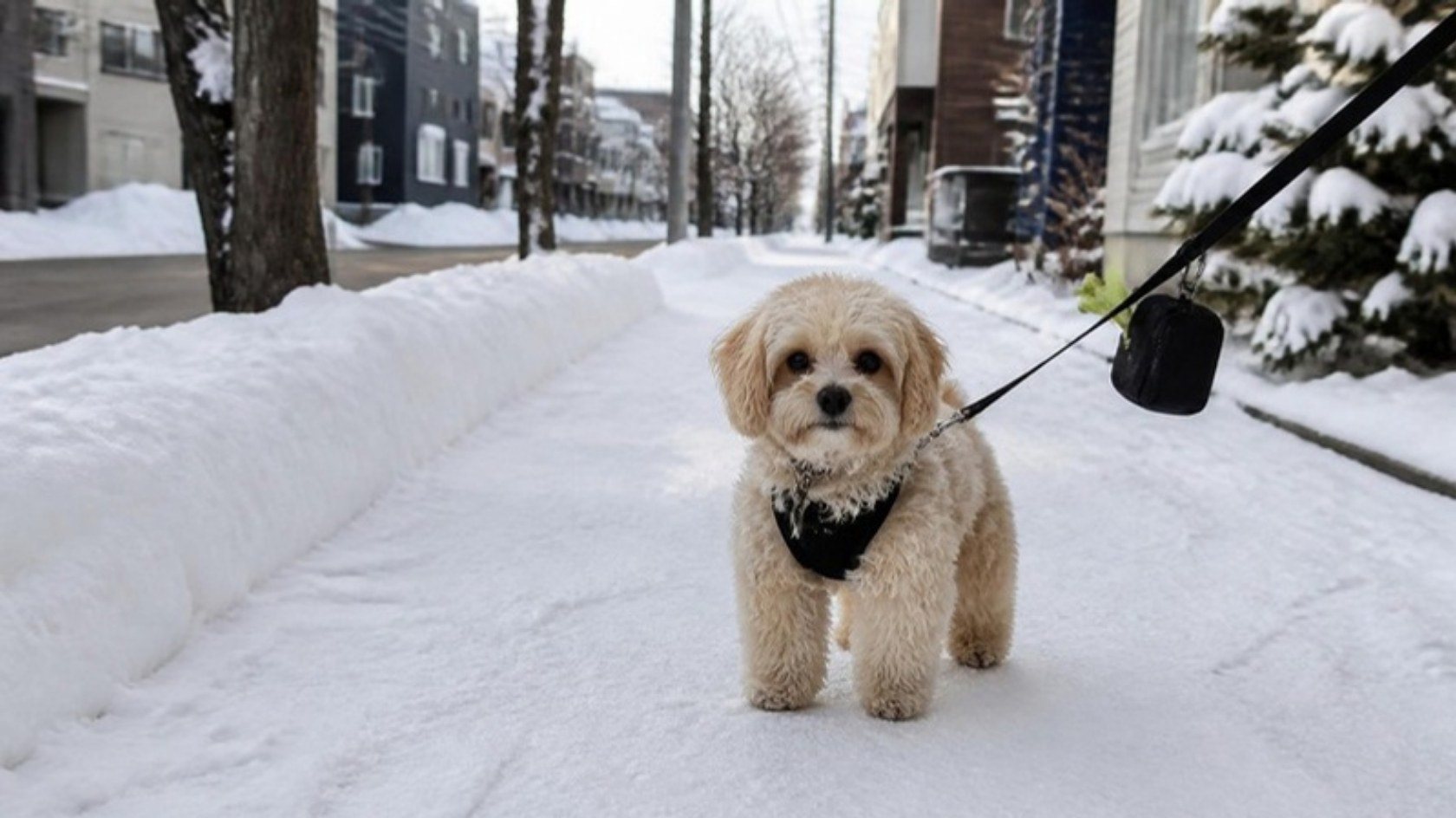
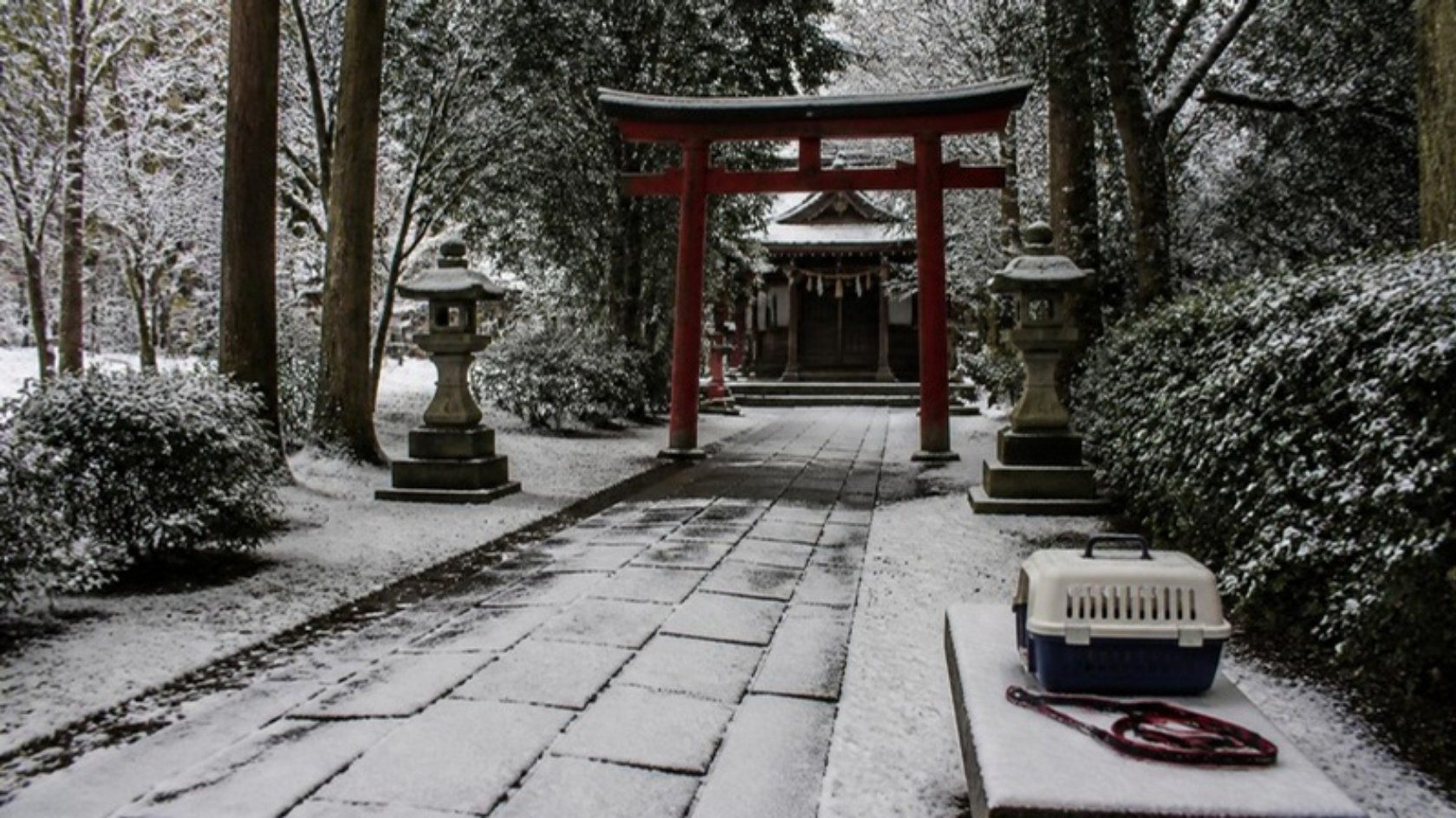
In a Sapporo winter, stone steps, approach paths, and slopes can be frozen or packed with snow.
- Wear shoes with good grip. Holding a dog while you slip is a risk for both of you.
- Take steps slowly, and use a handrail if there is one.
- Wipe your dog’s paws. Snow and ice can stick to paws, so wipe them after the visit.
- Keep the visit short on very cold days.
If anything about your dog’s paws or body worries you after a winter outing, please ask your vet.
Check each site’s own rules, choose a quiet time, and be ready to carry your dog when asked. A short leash, clean-up bags, and respect for the people around you can help make the visit calm. In winter, take extra care on icy steps.
FAQ
Are dogs allowed at shrines and temples in Japan?
It depends on the place. Some sites allow dogs on the grounds and some do not. Check the official website or the signs at the entrance, and follow each site’s own rules.
Is it okay to bring my dog for the New Year visit?
The New Year visit period can be very crowded, and a small dog can be stepped on or get scared. Consider visiting on a quieter day, or leaving your dog at home for that visit.
Should I carry my small dog at a shrine or temple?
Some sites ask visitors to carry dogs in their arms or in a carrier, in some areas or on the whole grounds. Follow the posted rules, and practice carrier training at home before your visit.