Hokkaido Road Trip with a Small Dog: A Planning Checklist
Contents
- Car safety: how your small dog rides
- Never leave your dog in a parked car
- Rest stops and Michi-no-Eki: plan your breaks
- Planning long drives across Hokkaido
- Summer heat and winter roads: season notes
- FAQ
- Can I leave my dog in the car for a few minutes at a rest stop?
- Can dogs go inside Michi-no-Eki roadside stations?
- How should a small dog ride in the car?
In short: on a Hokkaido road trip with a small dog, secure your dog in the car with a crate, carrier, or dog seatbelt, never leave your dog alone in a parked car, plan regular breaks, and check each rest stop’s pet rules. Plan shorter driving days than you think you need, and prepare for summer heat or winter snow depending on the season.
Hokkaido is big, and many people explore it by car. With a small dog in the back seat, a road trip takes a little more planning.
Please read this first: this post is a general checklist that many owners use. It is not about my own dog, and I don’t recommend any specific route, rest stop, or stay. I am not a veterinarian. If you are not sure whether a long car trip suits your dog, please ask your vet before you go.
Car safety: how your small dog rides
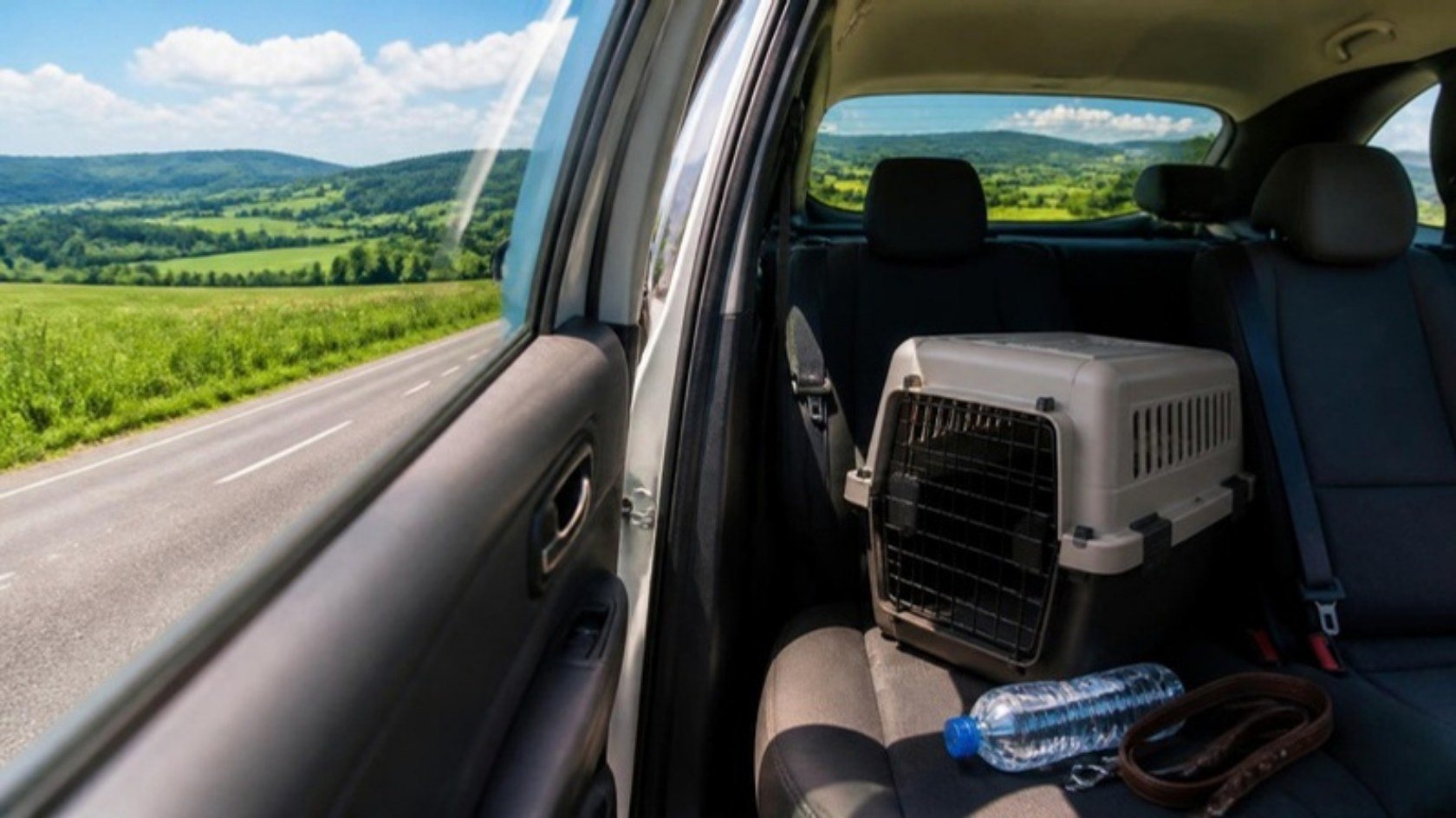
A loose dog can distract the driver and can be thrown forward in a sudden stop. So the first item is simple: give your dog a fixed place to ride.
| Option | How many owners use it | Points to check |
|---|---|---|
| Crate or hard carrier | Placed on the back seat or floor and held in place | It should not slide or tip over when the car turns or stops |
| Dog seatbelt (tether) | Clips to a harness and to the car’s seatbelt system | Attach it to a harness, not a collar, and keep it short enough that your dog can’t reach the front seats |
| Car seat or booster for small dogs | A raised bed that attaches to the seat, often with a short tether | Check that it is fixed to the seat, not only resting on it |
A few general habits:
- Keep your dog off the driver’s lap and away from the pedals.
- Practice before the trip. Short drives around town help your dog get used to the crate or tether.
The Hokkaido government’s “Drive Hokkaido” page on safe driving asks that everyone in the car fasten their seatbelt and that small children sit in child seats. The same idea, a secure place for every passenger, works well for a dog too.
Never leave your dog in a parked car
This is the one point I want to state clearly: don’t leave your dog alone in a parked car, even “just for a few minutes” at a rest stop or shop.
JAF, the Japan Automobile Federation, tested how hot a parked car gets in summer. In its test (August 2012, outside temperature 35°C, in Saitama), the inside of a black car reached a maximum of about 57°C during the afternoon, and a white car about 52°C. A sunshade or a window opened 3 cm lowered the temperature somewhat, but it still stayed high. JAF concluded that these measures could not stop the heat from rising.
In winter, a parked car gets cold quickly once the engine is off. The simple rule many owners follow is: if your dog can’t come with you, someone stays with your dog, or you change your plan.
Rest stops and Michi-no-Eki: plan your breaks
Outside the expressways, Japan has roadside stations called Michi-no-Eki. According to Japan’s Ministry of Land, Infrastructure, Transport and Tourism (MLIT), they are rest areas along general roads, with parking, washrooms, and telephones available 24 hours a day, plus information for travelers.
These are handy places for a break, but pet rules are different at each place. Some may have an area where dogs can walk, and rules for dogs inside shops or restaurants differ from place to place. Check each place’s own information, or ask the staff.
| Break checklist | Why it helps |
|---|---|
| Plan regular breaks, not only when you need fuel | Gives your dog a chance to stretch, drink, and go to the toilet |
| Use the leash before you open the door | A small dog can jump out quickly in an unfamiliar place |
| Walk only where dogs are allowed | Look for signs, and keep away from entrances and food areas |
| Pick up and carry out waste | Bring bags and a small sealed container |
| Offer water in your dog’s own bowl | A familiar bowl makes a short water break easy |
| Wipe paws before getting back in | Keeps sand, mud, or snow out of the car |
For general manners when you are out with your dog, see Living with a Dog in Japan: Basic Rules and Manners.
Planning long drives across Hokkaido
Places that look close on a map can take longer to reach than you expect, especially in rain or snow. I won’t give distances or driving times here, because they change with the route, season, and weather. Check a navigation app and the latest road information.
Some planning habits many owners use:
- Plan shorter driving days. Leave room for breaks, slow traffic, and a dog who needs extra time.
- Book your stay first, then plan the route. Not every stay accepts dogs, and rules differ. My list of questions to ask before booking a dog-friendly stay in Hokkaido may help.
- Keep your dog’s routine close to normal. Familiar food, a familiar blanket, and usual walk times can help a dog settle in a new place. If you have questions about meals on travel days, ask your vet.
Summer heat and winter roads: season notes
Summer. Hokkaido summers are often described as mild, but hot days still come. Hot pavement in a parking lot can be hard on paws, and a car heats up fast in the sun. Plan walks for cooler hours, park in shade where you can, and bring plenty of water. For more on warm days, see Summer Walks with a Small Dog in Sapporo: Timing and Heat.
Winter. The Hokkaido government’s “Drive Hokkaido” page on winter roads warns that icy road surfaces are far more slippery than dry roads in summer. It asks drivers to change to winter tires early, carry items such as snow chains and a shovel, brake gently, and keep a much longer following distance than in summer. With a dog on board, add a few things of your own:
- Summer: extra water, a collapsible bowl, a cooling mat, and a towel.
- Winter: a blanket, a towel for snowy paws, a coat if your dog wears one, and extra time in your plan.
- Any season: leash and harness, waste bags, food, your dog’s usual items, an ID tag, and your vet’s phone number.
If roads look bad, it is fine to wait or change your plan. Arriving late is better than driving on ice in a hurry.
A road trip with a small dog works well when the dog has a safe seat, regular breaks, and a person who is never too far away. Pack a little extra, check the rules at each stop, and enjoy the drive together.
FAQ
Can I leave my dog in the car for a few minutes at a rest stop?
It is safer not to. In a JAF test on a 35°C summer day, the inside of a parked car reached over 50°C, and a sunshade or a slightly open window could not stop the temperature from rising. If your dog can’t come with you, have someone stay with your dog.
Can dogs go inside Michi-no-Eki roadside stations?
It depends on each place. Michi-no-Eki offer parking and washrooms 24 hours a day, but rules for dogs in shops, restaurants, and outdoor areas differ. Check each station’s own information or ask the staff.
How should a small dog ride in the car?
Many owners use a crate or carrier that is held in place, or a dog seatbelt attached to a harness. The goal is a fixed place where your dog can’t reach the driver or be thrown forward in a sudden stop.
Sources checked: JAF, 真夏の駐車中の車内温度 (summer car interior temperature test) (Japanese), Ministry of Land, Infrastructure, Transport and Tourism, “Roads in Japan: Michi-no-Eki”, Hokkaido Government, “Driving on winter roads ~Drive Hokkaido”, Hokkaido Government, “Safety-minded driving ~Drive Hokkaido”. Checked on October 6, 2026. Rules and facilities can change, so please check the latest information.